Site Migration Notice – Aquatic Life Profiles
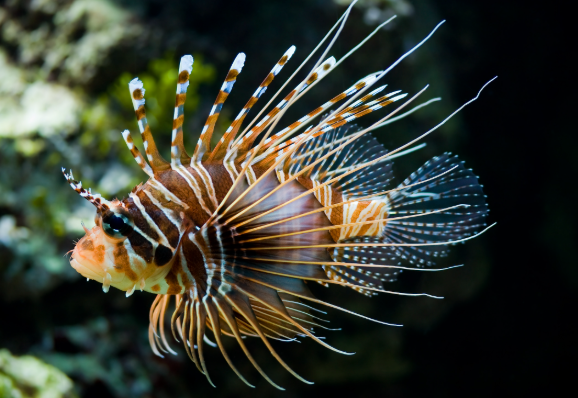
Poisonous elegance? Unveiling the mysterious temperament of the lionfish
https://www.wonhat.com/unique-aquatic-wonders-a-guide-to-marine-and-freshwater-marvels/
In the ocean, some fish dominate by their looks, others by their strength. But there’s also a peculiar creature: stunning in appearance and graceful in movement, yet harbouring a sinister scheme. They are the lionfish. Many people, upon first encountering a lionfish, can’t help but exclaim, “Wow, this fish is so beautiful!” But a closer look reveals that they’re more than just beautiful; they also carry a touch of danger and mystery.
First sight of a lionfish: like a peacock spreading its feathers under the sea
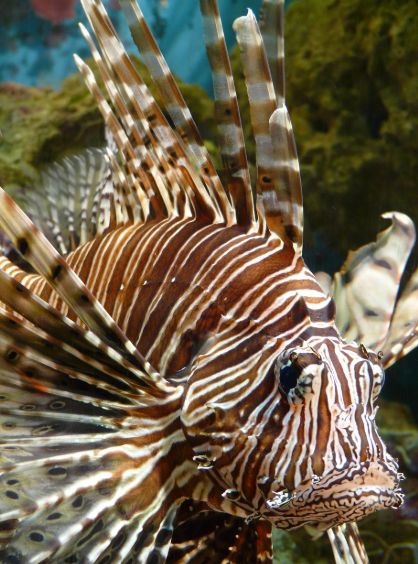
The lionfish’s appearance is truly unforgettable. Their bodies are covered in interlaced red, brown, and white markings, and their long dorsal and pectoral fins resemble the magnificent peacock’s spread tail. When they swim in the water with their fins spread out, they resemble a dancer in a fringed skirt twirling in the sea.
No wonder they are called “Lionfish”. Their spread-out fins look like a lion’s majestic mane, making them look both noble and domineering.
The little secret behind beauty: it comes with poison needles
But don’t be fooled by the lionfish’s beauty. Their fins aren’t just for decoration; they’re weapons, hiding venom glands. If a predator or a human approaches, the lionfish will raise its fins, a warning: “Don’t act rashly. I’m not to be trifled with.”
If stung, they can cause severe pain and, in severe cases, breathing difficulties. However, lionfish venom is generally not fatal and is more of a self-defense measure. In other words, their beauty carries an aura of “inviolability.”
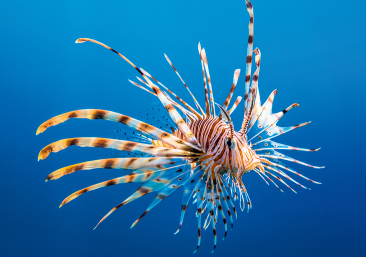
Lionfish Daily Life: Elegant Hunter
While lionfish often swim slowly, resembling naive princesses, they are actually highly efficient predators. They often hover quietly in the water, waiting for small fish or shrimp to approach, then suddenly open their jaws and swallow their prey whole. Their speed completely defies people’s initial impression of them as “elegant.”
This side of “disguising itself as gentle but actually being ruthless” also gives lionfish unique survival wisdom in the ocean world.
From ornamental fish to “ecological invader”
Lionfish were originally found in the Indian and Pacific Oceans, but human activities have led to their introduction into the Atlantic and Caribbean Seas. Originally intended for viewing, they have surprisingly thrived in their new environment.
Unconstrained by natural enemies and possessing a prodigious reproductive capacity, lionfish populations have exploded. Their voracious prey on small local fish and crustaceans has severely threatened the local marine ecosystem. Thus, they have transformed from “undersea beauties” into “ecological troublemakers.”
Humanity’s helplessness and countermeasures
Humans have come up with a variety of solutions to deal with the invasive lionfish, such as encouraging fishermen to catch them and even developing “lionfish cuisine.” Some say eating them may be the most direct way to control their numbers.
In some diving activities, “lionfish hunting competitions” are also organized, which not only satisfies people’s curiosity but also plays a role in protecting the ecology. It must be said that this is also an alternative way to “save the ocean with food.”
The charm of lionfish in the aquarium circle
Although the invasion of lionfish in the wild is a headache, it is still a “star species” in the eyes of aquarium enthusiasts. Many people like to keep one or two lionfish in large saltwater tanks to appreciate their gorgeous posture when they spread their fins.
However, keeping lionfish isn’t easy. Their large size requires ample water, their carnivorous diet often requires live bait, and, most importantly, their venomous stings. Therefore, lionfish aren’t the first choice for beginners without some experience.
At last
The lionfish perfectly embodies the phrase “poisonous elegance.” Their exterior is as ornate as a work of art, yet their fins conceal sharp weapons. They swim with ethereal grace, yet hunt with swiftness and decisiveness. Once a favorite among ornamental fish, they are now a challenger to the ecosystem.
Perhaps, this is the mysterious temperament of lionfish: beauty and danger coexist, gentleness and dominance coexist.
So, next time you see a lionfish in an aquarium or the ocean, take a second look. Appreciate its beauty, but also remember to remain in awe, because beneath that elegant exterior lies a power that cannot be ignored.
https://www.wonhat.com/unique-aquatic-wonders-a-guide-to-marine-and-freshwater-marvels/
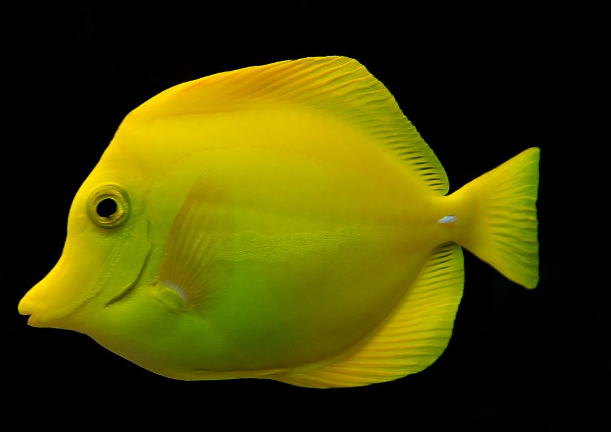
The ocean’s “little lemon slices”: The shining debut of the yellow tang
If the ocean is a vast blue canvas, then the yellow tang is undoubtedly the most dazzling color on it. Their golden hue and glittering movements resemble tiny lemon slices, instantly capturing everyone’s attention, whether in the vast waters of Hawaii or in the privacy of your own aquarium. Today, let’s discuss this “little sun” of the ocean—the yellow tang.
First sight of yellow tang: a stunning bright yellow
When seeing the yellow tang for the first time, most people’s reaction is “Wow, so bright!” Its body is oval in shape, with clean and neat lines, and its bright yellow color makes it almost impossible to ignore.
Even more interesting is that, whether in clear water or a glass aquarium, this fish seems to possess its own filter. The moment sunlight hits it, it instantly enlivens the entire space. No wonder some say that keeping a yellow tang is like lighting a small lamp in your aquarium.
Not only good-looking, but also has “personality”
Despite their attractive appearance, yellow tangs can be quite temperamental. As active marine fish, they love to dart around in the water, sometimes even displaying territorial awareness towards their own kind. This means that if the tank is too small or too crowded, they may become aggressive.
But don’t worry; in the right environment, yellow tangs are actually quite friendly. They can coexist peacefully with most peaceful marine fish. Give them enough space to roam, and they’ll become the lifeblood of your aquarium.
Natural “cleaner”: a herbivorous expert
Yellow tangs also have unique eating habits. They primarily feed on algae, making them the “cleaners” of the aquarium. If small green algae grow on the aquarium walls or decorations, yellow tangs will nibble them away bit by bit, truly serving as a helpful assistant to the fishkeeper.
In the wild, yellowtail tangs also play an important role. They nibble on algae on coral reefs, helping to maintain the balance of marine life. So, this “little lemon slice” is not only beautiful, but also quite environmentally conscious.
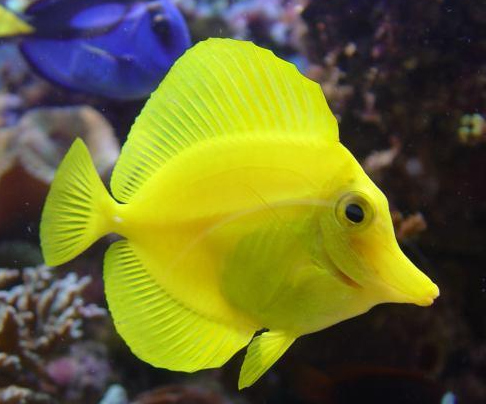
Star fish from Hawaii
When talking about the “homeland” of yellow tangs, Hawaii is a must-mention. Schools of yellow tangs swimming in the crystal-clear waters resemble countless lemon slices floating against a blue backdrop, a scene that’s breathtakingly beautiful.
Because of this, yellow tangs have become a favorite among divers and tourists alike. Nine out of ten photos taken on their first dives feature yellow tangs. They are like an iconic symbol of Hawaiian waters.
The “little sun” in the fish tank
In any home aquarium, the yellow tang is a must-have star. Not only are they visually appealing, they also bring a vibrant touch to the entire tank. Imagine a bright yellow yellow tang swimming beneath a blue background. The contrast creates a natural artistic flourish.
However, be aware that although yellow tangs are beautiful, they also have certain requirements for water quality. If you want to keep them, you must ensure that the water quality is clear and stable, and the fish tank space must be large enough, otherwise they may not be very happy.
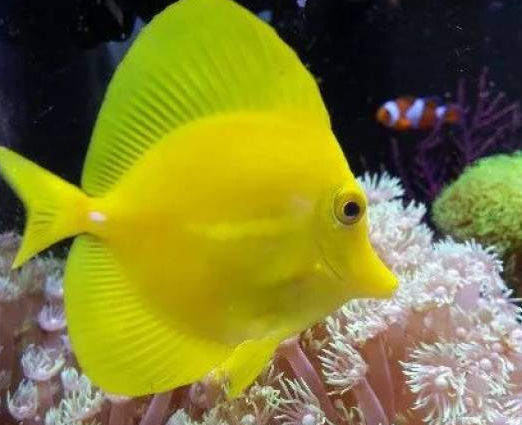
At last
The yellow tang is like a slice of lemon in the ocean—bright, vibrant, and healing. Its sun-kissed colors embellish the underwater world with vibrant life, and its diligent eating habits quietly safeguard ecological balance.
So, next time you are diving in the sea or walking into an aquarium and see that bright yellow, remember to stop and appreciate it. Because it is not just an ordinary fish, but a “little happiness” given to us by the ocean.
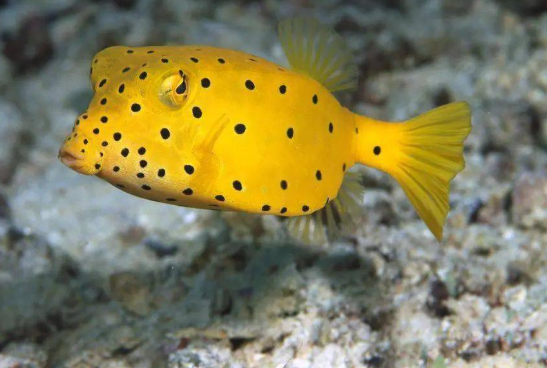
The boxfish looks like a building block, but can swim freely in the sea
https://www.wonhat.com/the-ultimate-guide-to-ornamental-fish-species-care-and-thriving-aquariums/
If you were to ask the most counterintuitive fish in the world, the boxfish would definitely be on the list. While other fish are known for their streamlined, graceful bodies, swimming like paintbrushes through the water, the boxfish defies convention. Its square shape, resembling a small building block, doesn’t seem to qualify as a fast swimmer. Yet, this seemingly silly little block manages to navigate the ocean freely and enjoy life to its fullest. Today, let’s talk about this amazing little creature—the boxfish.
First sight of boxfish: the unforgettable “square fish”
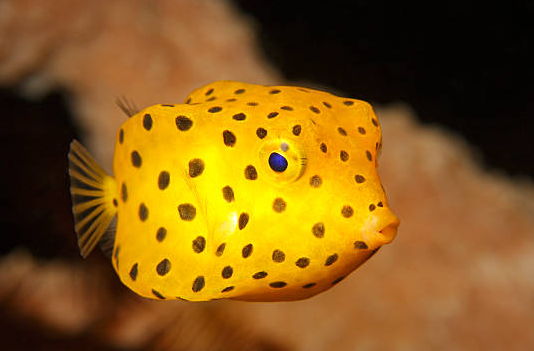
Seeing a boxfish for the first time often makes you laugh. Its body looks like it’s been shaved, its hard shell encasing the entire thing, making it square and sharp. If you don’t tell people it’s a fish, many might mistake it for a toy.
Another distinctive feature of boxfish is their incredible color diversity. Some are dazzling golden, shimmering like little suns in the water; others are spotted, resembling moving dice; and still others, with their ever-changing colors, are practically underwater fashion icons. It’s no wonder many divers say that seeing a boxfish for the first time is like discovering a “strange work of art on the seafloor.”
Survival wisdom beneath a square appearance
Some might be curious: With such an unsmooth body, can the boxfish really swim? The answer is – don’t be fooled by its square shape, it can swim very well.
It turns out the boxfish’s body structure is remarkably ingenious. Its entire body is covered in hard bony plates, acting like a natural armor, both protecting it and maintaining stability. It swims not by swinging its body dramatically, but by constantly flapping its pectoral and dorsal fins, small yet agile movements. It appears to “suspend” in the water, swaying slowly and rhythmically.
Even more intriguingly, scientists have discovered that the boxfish’s square shape actually reduces drag in water, actually increasing its maneuverability. In other words, it’s not a “cumbersome cube,” but a “geometry expert who can swim.” This is truly a marvel of nature’s design.
Cute appearance, but a bit poisonous inside
Despite its cute appearance and seemingly innocent nature, the boxfish is actually a dangerous little fish. When threatened, it secretes a toxic substance that repels nearby fish. To its predators, it’s like a “square box with spines,” making it a tough target.
But don’t worry, it usually doesn’t release toxins on its own initiative, and only releases them when it’s extremely nervous or forced. In other words, as long as you don’t mess with it, it’s a docile and interesting aquarium fish.
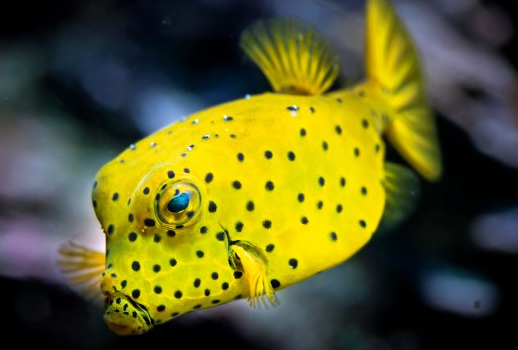
Popularity of boxfish in the aquarium community
Many marine aquarium enthusiasts have a special fondness for the boxfish. Why? It’s simple—it’s unique. After seeing elegant angelfish and flamboyant clownfish, adding a boxfish instantly transforms the entire aquarium.
The small boxfish, in particular, is small, brightly colored, and swims in a clumsy yet adorable manner, making it the “ugly-cute” of the aquarium. Once it appears, all other fish become mere backdrops. Some say that raising a boxfish is like adding a “mascot” to your aquarium.
Of course, raising them isn’t without its challenges. Because boxfish have high water quality requirements, they require experience to keep, and they should avoid mixing them with aggressive fish to prevent them from releasing toxins due to stress, potentially affecting the entire tank.
Cute daily life: like an “underwater robot”
Observing the daily life of a boxfish is quite fascinating. It swims slowly, like a little robot on a mission. When it sees something it’s curious about, it approaches, looking left and right, displaying a naturally adorable demeanor.
Some boxfish even display a friendly attitude toward their owners. Whenever you approach the tank, they’ll swim over as if to say hello. Many fish keepers say that while boxfish aren’t exactly smart, they’re incredibly entertaining, and keeping one is like having a cute little friend.
Scientists’ muse
Even more amazing is that the boxfish’s unique shape has inspired scientists and engineers. Some have studied its body structure and found that it can maintain stability and flexibility while swimming. Inspired by this, they have designed more fuel-efficient and stable car shapes and robot models.
Just think about it, a small, boxy fish can actually drive technological development. Isn’t that cool? Nature truly is the ultimate designer.
At last
The boxfish is a fish that makes you smile. Unlike other fish, it has a boxy, square shape that’s instantly appealing. It may look a bit clumsy, but it’s actually quite agile; it may appear dull, but it possesses a subtle ingenuity. It’s this contrast that makes the boxfish so unique in the ocean. So, next time you see a boxfish in the ocean or at an aquarium, take a closer look.
You will find that this little guy who looks like a building block is swimming happily in the water, as if saying: No matter how strange your appearance is, living your own style is the coolest.
https://www.wonhat.com/the-ultimate-guide-to-ornamental-fish-species-care-and-thriving-aquariums/
The little bully in the fish tank: the domineering side of the map fish
https://www.wonhat.com/the-ultimate-guide-to-ornamental-fish-species-care-and-thriving-aquariums/
When it comes to ornamental fish, many people immediately think of the gentle, quiet goldfish or the elegant, noble discus. But if you’ve ever kept a genus, you’ll discover it’s anything but the quiet, background-filled, and refreshingly simple. The daily life of a genus can be summed up in two words: domineering .
It’s not the gentlest in the aquarium, but it definitely has the most presence. Some say raising a tuna is like living with a fiery-tempered older brother; others jokingly call it the “little bully” of the aquarium world, flaunting its beauty and commanding presence. Today, let’s discuss why tuna are so aggressive and what it’s like to live with one.
Artistic patterns
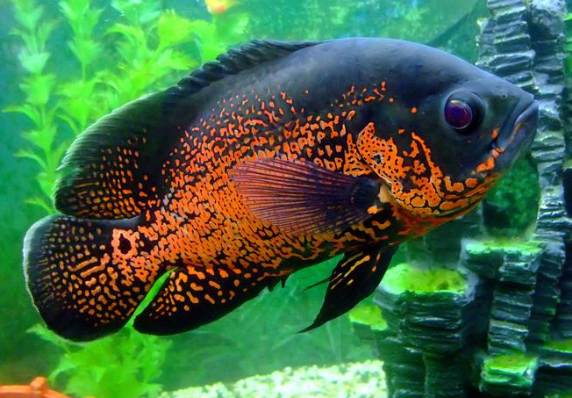
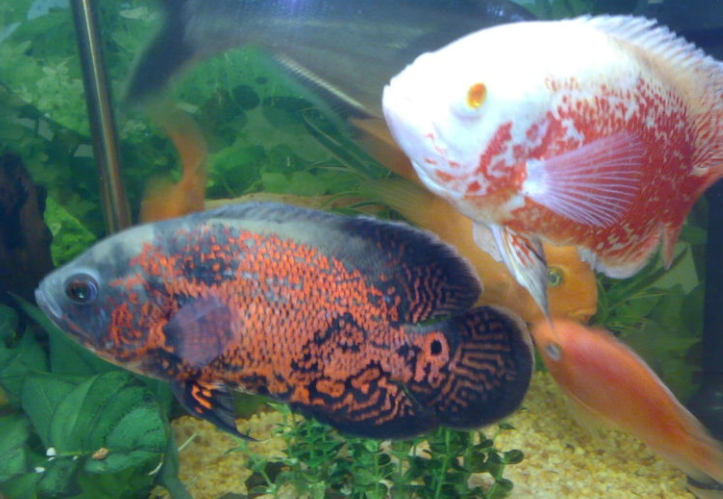
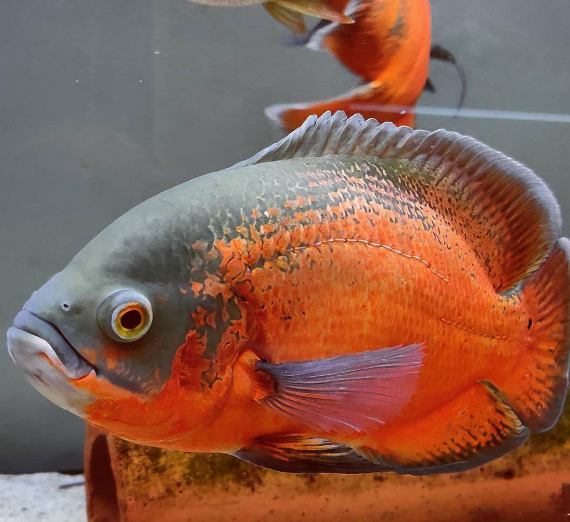
The map fish is so called because its markings are as complex and varied as a map. The orange, red, black, and gray intertwine, as if someone has casually splashed paint in the water and happened to create an abstract painting of nature.
Moreover, each Atlas fish’s pattern is unique, like a fingerprint. Sometimes, if you stare at its body for long enough, it feels like it’s telling you a story: a continent, a river, even a drifting cloud. Ornamental fish enthusiasts love this “self-contained canvas” feeling; owning an Atlas fish is like owning a living, moving work of art.
A bit hot tempered
The appearance of an artist is coupled with the personality of a bully. The map fish is extremely territorial, believing its aquarium to be its world. Any fish that dares to enter its territory will be chased or pecked.
Even more interesting is that they’re particularly prone to competitive behavior with their own kind. Two map fish in the same tank are likely to engage in a daily battle for supremacy. Watching them shove each other mouth to mouth is nothing like the kissing of kissing fish; it’s a head-on, head-to-head, arm-wrestling match.
Therefore, many experienced fish lovers remind novices: either keep only one map fish, or keep a large fish tank and add some companions that can compete with it. Otherwise, you may have to clean up the butts of the bullied fish every day.
The side of the “house-destroying demon”
The trevally is nicknamed the ” renovator” of the aquarium world . It particularly enjoys rummaging through the tank’s decorations, chewing and moving rocks, plants, and even driftwood. The tank you painstakingly arranged yesterday might be completely redesigned by it the next day.
Some people jokingly say that the ichthys is the real owner of the aquarium, and you are just a temporary babysitter. You want it to stay in a nice environment, but it will move everything in the aquarium upside down, as if to tell you: “This is my territory, I have the final say.”
But to be honest, although this kind of “house-destroying behavior” is a headache, it also makes people laugh and cry. You will find that the map fish is really a bit childish and naughty, and a little cute in its domineering nature.
Foodie
Despite their domineering nature, the Atlas fish has another unique characteristic: its appetite. It consumes almost anything, from small fish and shrimp to insects and pellets. Sometimes, when it’s extremely hungry, it will suddenly burst to the surface, splashing and startling its owner.
Because of this, Atlas fish grow so quickly. A tiny fry can grow to the size of your palm in just a few months, and after a while, you might need to move to a larger aquarium to accommodate it. Some jokingly say that keeping an Atlas fish isn’t like keeping a pet, but rather a “water beast.”
It also has gentle moments
Although the Atlas fish has a domineering appearance and a fiery personality, you will find that it is actually a bit “human-like” after raising it for a long time. Many fish keepers have found that when the owner approaches the fish tank, the Atlas fish will actively swim over, as if to interact with you.
Some map fish can even recognize people and become particularly close to the person they feed. If you gently tap on the glass of the fish tank a few times, it will come closer, as if responding to you.
Therefore, the charm of the map fish lies in its sense of contrast: on the one hand, it is the little bully in the fish tank, and on the other hand, it is the “domineering president” who will interact with you, which both gives you a headache and makes your heart beat.
Tips for raising map fish
If you also want to challenge this “little bully”, you must do your homework in advance:
Prepare a large fish tank : The map fish can grow to 20 cm or even larger, and a small tank is not enough for it to run wild.
Don’t mix fish randomly : it is not suitable for small and gentle fish, and there is a high possibility of “tank bullying”.
The food should be balanced : Although the baby can eat, you should also pay attention to nutrition. Don’t always feed live food as it will easily become picky.
Accept the fate of “demolition” : either put fewer decorations, or be prepared to rearrange the fish tank every day.
At last
The trevally is no gentle, fresh-faced fish; it’s the king of the aquarium. Its dominance, its playfulness, its appetite, and even its proclivity for destroying things make it both beloved and hated. Some give up on keeping it because of its temper, but many more are captivated by its unique personality.
Ultimately, raising a genus is more like raising a companion with a temper than simply an object for appreciation. It’s more than just a piece of scenery in your aquarium; it’s a living being with a strong presence, a constant reminder that the aquarium world has its own “little tyrants.”
https://www.wonhat.com/the-ultimate-guide-to-ornamental-fish-species-care-and-thriving-aquariums/
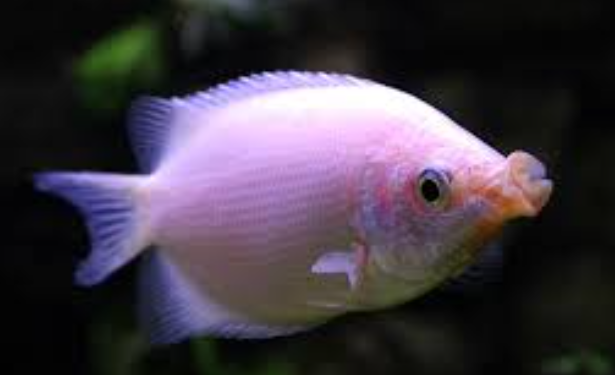
The truth about kissing fish: They are not showing affection, but competing!
https://www.wonhat.com/the-ultimate-guide-to-ornamental-fish-species-care-and-thriving-aquariums/
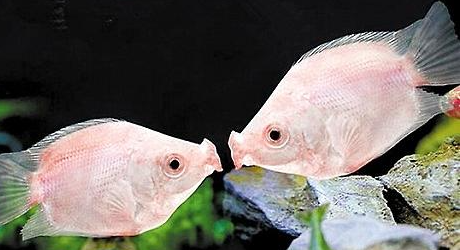
If you’ve ever kept kissing fish or seen them in an aquarium, you’ve likely been captivated by their kissing gestures. The two fish, face to face, touch mouths, and it looks like a sweet, almost cloying display of affection. Many people’s first reaction is, “Wow, these fish are so romantic!” Some even exclaim, “It’s like a love story in the water.”
But things aren’t as simple as you might think. Today, let’s talk about why kissing fish kiss. The reason behind this isn’t romance, but competition.
First, let’s get to know the kissing fish
Kissing fish, scientifically known as Kissing Gourami , are native to tropical Southeast Asian regions, including Thailand and Indonesia. They are medium-sized, reaching approximately 20 centimeters in length at maturity. Their bodies are often light green or pinkish-white, and their protruding mouths resemble two suction cups, a crucial element in their ability to kiss.
Because of its unique appearance and amusing movements, kissing fish are very popular in the ornamental fish market and are often placed in home aquariums as “living treasures”.
It looks like a kiss, but it’s actually a quarrel
Many people think two kissing fish are in love when they see them kissing each other mouth to mouth, but that’s not the case at all.
It’s not a display of affection, but a competitive act .
Scientific research indicates that kissing fish are actually a form of fighting . They use their mouths to push each other back and forth, trying to see who has more power and can push the other backward. This mouth-to-mouth confrontation is usually over territory, food, or a fight for dominance .
Simply put, it wasn’t a kiss of love at all, but more like a head-on collision in a boxing ring. It was only because the action was so similar to a kiss that humans mistook it for a romantic scene.
So will they really fall in love?
Since “kissing” is fighting, do kissing fish have a truly romantic side?
The answer is yes.
During the breeding season, male fish become more active, using their movements and colors to attract females. The females then lay their eggs, while the males guard them. While this doesn’t involve actual kissing, it’s a uniquely intimate interaction.
However, the “kissing” you see in daily life is most likely not love, but a contest of strength.
Things to note when raising kissing fish at home
If you’re planning to keep kissing fish, you need to understand their personalities. Although they appear gentle, they can actually be quite aggressive .
Here are a few tips to consider:
The tank should be large enough.
Kissing fish are large and active. If the space is too small, they are more likely to get into conflicts. A spacious aquarium can reduce friction.
Don’t just keep one pair.
Many people think kissing fish look better in pairs, so they buy just two. However, this can lead to constant kissing and fighting. Keeping three or more can help distribute their attention and reduce confrontation.
Note that
kissing fish can get along well with some small, gentle fish, but if they encounter fish that love to fight, they may fight every day. For example, don’t easily put it with arowana or map fish.
Diversified diet:
They like algae and plant debris, and can also eat artificial feed. A balanced diet, good condition, can also reduce conflicts caused by competing for food.
Why do people still think they are cute?
It is interesting that even though people know the truth about kissing fish, they still can’t help but be attracted by their appearance. There are several reasons for this:
The actions are fun : Regardless of whether they’re fighting or not, just putting mouths together is super cute.
The scene is unique : other fish fight by chasing and biting each other, but the way kissing fish fight is so “gentle”.
Easy to anthropomorphize : Humans are accustomed to fitting animal behavior into their own emotional framework, and when they see “mouth to mouth”, they automatically associate it with romance.
Therefore, the kissing fish has inadvertently become a “love fish” and has been given additional symbolic meaning.

A little science: Another function of kissing fish
Kissing fish also have a unique quirk: they can “suck” on the glass of aquariums, removing algae. This ability to “clean the glass” has made them a popular choice for many aquarium enthusiasts. While not as professional as scavengers, they can still provide a useful aid.
At last
Kissing fish are a very interesting ornamental fish. They have a romantic name and unique movements, and they look like the spokespersons of love, but the truth is “an alternative way of fighting.”
However, this “misunderstanding” is precisely their charm. After all, who doesn’t like a little laughter and surprise in their aquarium? Whether it’s a show of affection or a rivalry, kissing fish can make your fish tank more storytelling.
So next time you see two kissing fish “touching” their mouths, you can smile and tell the people around you:
“Don’t be fooled by them, they are not spreading candy, but arm wrestling!”
https://www.wonhat.com/the-ultimate-guide-to-ornamental-fish-species-care-and-thriving-aquariums/
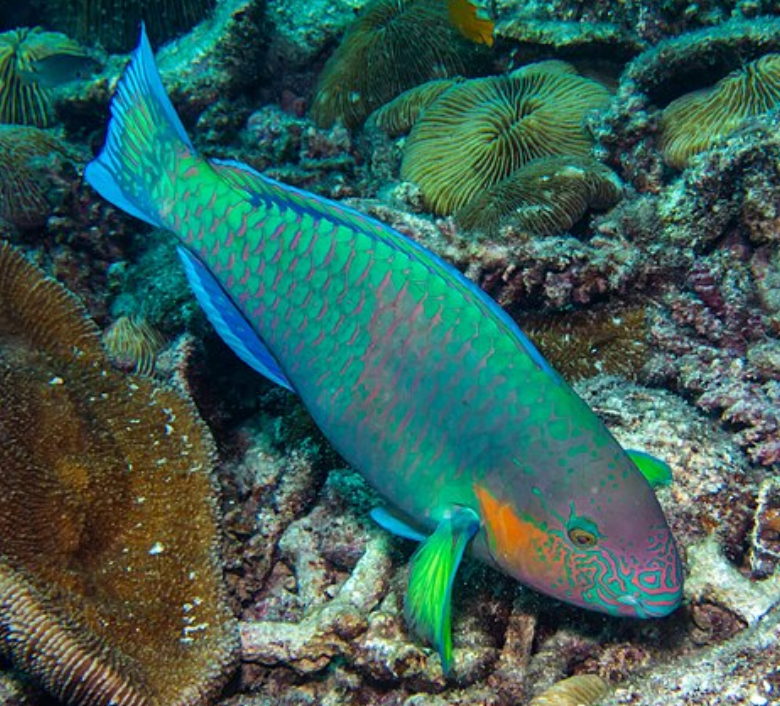
Hawkfish and coral sand: Ecological wonders of the tropical ocean
https://www.wonhat.com/unique-aquatic-wonders-a-guide-to-marine-and-freshwater-marvels/
The white sand beaches and beautiful coral reefs of tropical waters are a result not only of the seawater and sunshine, but also of marine life. Hawkfish, in particular, play a crucial role in the coral ecosystem. They eat coral and other organisms attached to it, then excrete the undigested coral debris, which forms “coral sand,” a crucial source of white sand beaches on tropical islands.
The formation of coral sand is part of a natural cycle, creating a welcoming haven for both tourists and marine life. These transparent grains of sand shimmer in the sun, their white and pale blue hues lending the island a uniquely romantic feel. This natural biological and geological cycle offers a more intuitive understanding of the complexity of marine life.
The unique eating habits of hawkfish
Hawkfish feed primarily on corals and algae. Their hard beaks are used to crush coral skeletons and algae, extracting nutrients during digestion. Undigested coral fragments are excreted and gradually accumulate on the beach. This process not only clears algae from the coral surface but also indirectly maintains the healthy balance of coral reef ecosystems.
This dietary habit makes hawkfishes a keystone species in coral reef ecosystems. Their feeding behavior controls algal overgrowth, preventing it from covering and suffocating corals, while also promoting their growth and reproduction. In other words, hawkfishes are not only beach builders but also reef guardians.
The strange phenomenon of gender change
Another interesting characteristic of hawkfish is their sex reversibility. At birth, all juveniles are typically female, or initially of their sex. As they grow, the largest individuals become alpha males, responsible for reproduction and territorial defense. This social sex reversal ensures reproductive efficiency within the school while optimizing group structure and preventing excessive competition.
This sex change, known in biology as sequential hermaphroditism, is a strategy evolved by many tropical fish to adapt to environmental pressures. By observing the social structure of hawkfish, we can discover the highly coordinated group behavior and the wisdom of natural selection in marine ecosystems.
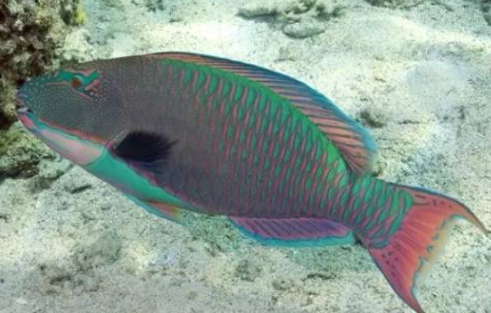
Hawkfish and Ecological Balance
Hawkfish contribute far more to coral reefs than simply forming beaches. They clean algae from the coral’s surface, helping to maintain its photosynthetic efficiency while also providing habitats for other small marine life. As one of the most biodiverse ecosystems in the ocean, the health of coral reefs directly impacts thousands of species of fish, invertebrates, and microorganisms.
Coral reefs and beaches are not only integral to the ecosystem but also provide economic value to coastal communities. For example, the tourism industry relies on beautiful white sand beaches to attract tourists, while the fishing industry relies on healthy coral reefs to protect fish stocks. Therefore, protecting hawkfish and their habitats has long-term significance for maintaining ecological balance and coastal economies.
The ornamental value and behavioral characteristics of hawkfish
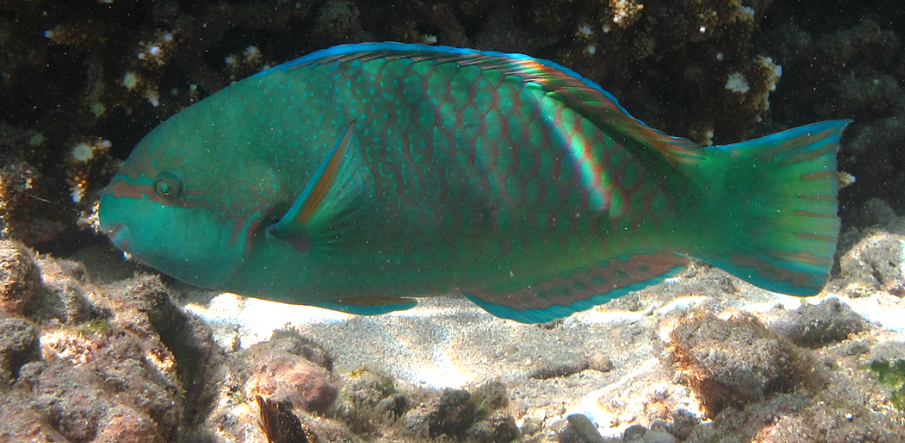
Hawkfishes come in a variety of colors, ranging from vibrant blue and green to orange-red, with coloration varying with age and sex. Their active swimming and feeding behavior make them a favorite addition to reef aquariums. They enjoy darting among corals, nibbling algae, and are highly social, frequently interacting with their peers.
This schooling behavior is not only aesthetically pleasing but also provides an opportunity to observe the behavior of marine life. By raising hawkfish, aquarists can learn about their unique behaviors, such as their social structures, foraging strategies, and sex changes, and gain a deeper understanding of tropical marine ecosystems.
The importance of coral reef protection
Despite the crucial role hawkfish play in ecosystems, coral reefs face threats from global climate change, rising sea temperatures, pollution, and overfishing. Coral reef degradation directly impacts hawkfish survival and coral sand production, ultimately impacting the entire island ecosystem. Protecting coral reefs and key fish populations is a core task in maintaining the ecological stability of tropical oceans.
Conservation measures include establishing marine protected areas, restricting fishing and tourism activities, and improving water quality management. Public education and scientific research are also crucial to help more people understand the importance of coral reef ecology and the role of hawksbill fish in the ecosystem.
Summary and Thoughts
Hawkfish not only create coral sand but also play a vital role in protecting the health of coral reefs. Through their unique diet, sex-changing mechanisms, and social behaviors, they maintain the complex balance of the ecosystem. Observing these fish allows us to gain a direct understanding of the intelligence and ecological collaboration of marine life.
In the face of global climate change and ecological pressures, protecting every hawkfish means the survival of coral reef ecosystems. For aquarium enthusiasts and environmentalists, considering how to protect these key species while enjoying the beauty of nature is a question worth exploring in depth. How do you balance ecological conservation with the need for marine viewing? This unique ecological relationship may inspire more people to pay attention to the future of tropical oceans.
https://www.wonhat.com/unique-aquatic-wonders-a-guide-to-marine-and-freshwater-marvels/
Guppy: The Colorful Fairy of Tropical Aquariums
https://www.wonhat.com/the-ultimate-guide-to-ornamental-fish-species-care-and-thriving-aquariums/
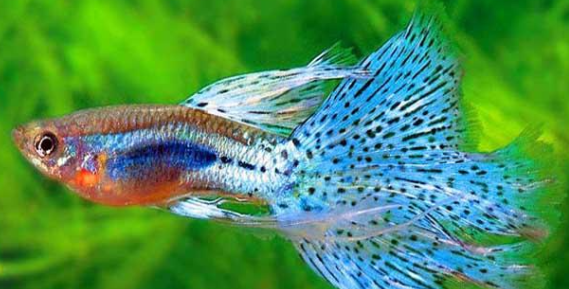
The guppy, scientifically known as Poecilia reticulata, is also called millionfish, rainbow fish, or fancy guppy. It is one of the most stunning freshwater tropical fish species. Native to rivers and lakes in South America, guppies are loved by aquarium enthusiasts for their slender bodies, vibrant tails, and gentle temperament.
A guppy’s tail is not just beautiful—it also plays an important role in social interactions within fish groups. Male guppies, in particular, display bright colors and patterns to attract females and showcase their health. Small in size, adult guppies typically grow only 2.5 to 5 centimeters long, making them an ideal choice for home aquariums.
Habitat and Adaptability
Guppies originate from tropical freshwater streams and wetlands, so they thrive in warm water. The ideal temperature range is 20–28°C (68–82°F), with stable temperatures helping to minimize stress and disease. Although guppies are relatively tolerant of different water conditions, a pH level between 6.8 and 7.5 and moderate hardness are best. Clean, well-maintained water is essential for their health.
These peaceful fish get along well with other small to medium-sized tropical fish, making them perfect for community tanks. However, avoid housing guppies with aggressive fish to prevent injury and stress.
Key Care Tips
1. Diet
Guppies are omnivores with moderate appetites. Feeding adult guppies once a day is sufficient. Their diet should include high-quality flakes or pellets, frozen aquatic invertebrates, and occasional plant-based foods like spinach or spirulina powder. A varied diet helps maintain vibrant coloration and overall health.
Be mindful not to overfeed, as guppies have limited digestive capacity. Overfeeding can lead to obesity and poor water quality. Controlled feeding and observing their eating behavior is key to keeping them healthy and active.
2. Aquarium Setup
Active and playful, guppies need plenty of swimming space. A tank of at least 20 gallons (about 75 liters) is recommended. Fine sand or gravel for the substrate, along with live plants, driftwood, and decorations, provides hiding spots and environmental enrichment. Plants not only enhance aesthetics but also improve water quality and create a safe habitat for breeding.
3. Breeding
Guppies are livebearers with impressive reproductive abilities. Under the right conditions, females can give birth to 20–50 fry every month. To protect the young, use a breeding box or dense plants to prevent adults from eating them. While guppies reproduce quickly, overpopulation can degrade water quality, so population control is crucial.
Behavior and Social Traits
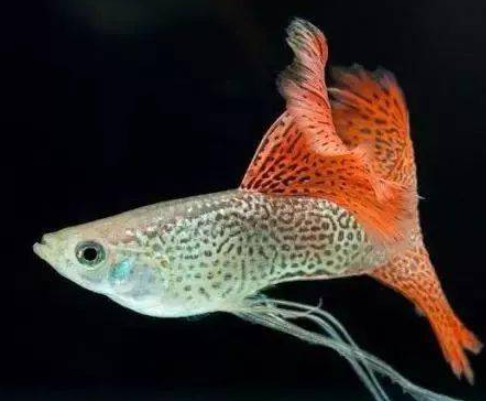
Guppies are lively and highly social. Male guppies often display their tails and vibrant colors to attract females and compete with other males. Observing these behaviors reveals fascinating social dynamics and miniature ecological systems within the tank.
Guppies also coexist well with other peaceful species such as zebra danios (Danio rerio) and neon tetras (Paracheirodon innesi), making them excellent community fish.
Health and Maintenance
Although guppies are hardy, they are still sensitive to sudden water changes and poor tank conditions. Common issues include ich (white spot disease), fungal infections, and stress caused by poor water quality. Regular water changes (about 25–30% weekly), stable temperatures, and efficient filtration are essential for disease prevention.
Avoid excessive handling or isolating female guppies for extended periods, as stress can affect their health and reproduction. Regularly observing their colors, energy levels, and appetite helps you catch early signs of illness.
Colors and Aesthetic Value
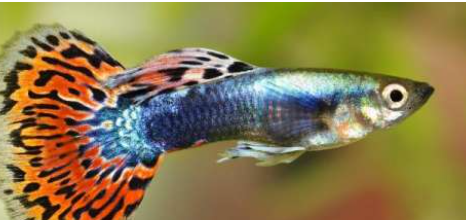
Guppies are renowned for their colorful tails and bodies. Males, in particular, feature fan-shaped, triangular, or lyre-shaped tails in vivid hues of red, blue, green, yellow, and mixed patterns. Through selective breeding, the aquarium trade now offers countless varieties, including red guppies, rainbow guppies, and more.
Coloration is not only for beauty; it reflects a fish’s health and genetic quality. Vibrant colors often indicate vitality and breeding potential, while dull or unusual colors may signal poor health or water issues.
Educational and Ecological Significance
Beyond their beauty, guppies are important in education and scientific research. Their mating behavior, social interactions, and tail displays make them excellent models for studying behavioral ecology. Keeping guppies also teaches aquarists valuable lessons about water quality management, ecological balance, and biodiversity conservation.
These small tropical fish allow hobbyists to explore aquatic ecosystems up close, fostering appreciation for nature and environmental protection.
Conclusion
With their stunning tails, peaceful nature, and adaptability, guppies are a true gem in home aquariums. From water quality management to breeding control, every aspect of guppy care reflects the science of fishkeeping. They are more than just a visual delight—they are a fascinating window into aquatic behavior and ecology.
If you dream of creating a vibrant, thriving underwater world at home, guppies might be the perfect place to start.
https://www.wonhat.com/the-ultimate-guide-to-ornamental-fish-species-care-and-thriving-aquariums/
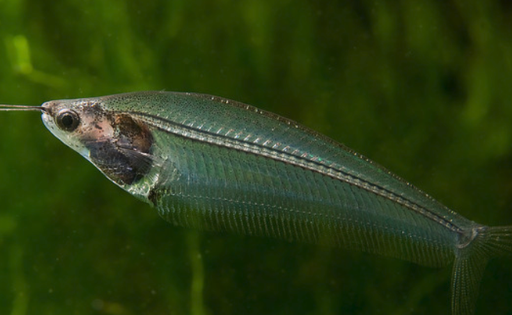
A Guide to Glass Lala Fish: A Fantasy Transparent Ornamental Fish
https://www.wonhat.com/the-ultimate-guide-to-ornamental-fish-species-care-and-thriving-aquariums/
Among various ornamental fish, the glass fish, known for its transparency, is considered an underwater wonder by aquarium enthusiasts. From the front, one can practically see its skeleton, internal organs, and blood vessels, creating a miniature underwater world. The glass fish belongs to the family Bilateria, and has a laterally compressed, short body. Adults are typically 5 to 6 centimeters long.
Males are pale yellow, while females are slightly darker. They often have a silvery, round spot in the center of their abdomens, which allows them to be distinguished. While this transparent fish is beautiful, the common glass fish on the market come in colors like pink, sky blue, tender green, and golden yellow, most of which are artificially dyed using lasers.
Under the light, the color is particularly bright, but this color is not long-lasting and may shorten the life of the fish. Therefore, choosing a naturally transparent or slightly dyed glass fish can help them live longer and healthier.
Breeding environment and water quality management
Glass Lala fish have high water quality requirements, and maintaining a stable and clean water environment is crucial for successful breeding. Ideally, the water temperature should be maintained between 24°C and 28°C , with a pH of 6.5 to 7.5 and a water hardness of 8 to 15 dehydrated greenhouse gases (dGH). As this fish is active, the aquarium should be spacious, with plants and rocks to provide them with shelter, habitats, and play areas.
Regular water changes are crucial for maintaining fresh water quality. We recommend changing approximately 20-30% of the water volume weekly to prevent ammonia and nitrate buildup and maintain fish health. Additionally, the pump and filter should be appropriately sized for the aquarium to ensure a steady and clean water flow.
Feed and nutritional requirements
Glass Lala are omnivorous fish with a wide diet, accepting pelleted feeds, artificial formula feeds, raw bait, and frozen bait. A balanced nutritional supply is crucial for maintaining their transparent color and vitality. When choosing a feed, consider choosing a protein-rich and trace element-rich feed to promote optimal growth and reduce health issues associated with nutritional imbalances.
In addition, live or frozen baits, such as brine shrimp and Daphnia, can enhance the fish’s natural foraging behavior, promote bright coloration, and increase the fun of observation and interaction. It is worth noting that overfeeding may lead to deterioration of water quality, and the amount of feed should be strictly controlled to ensure the ecological balance of the aquarium.
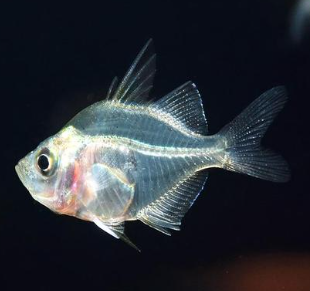
Fish personality and behavioral characteristics
Glass Lala fish are gentle and lively, making them suitable for group housing. They are agile swimmers and enjoy moving freely within the aquarium, especially among plants and rocks. Their transparent coloration creates unique light and shadow effects, adding to their visual beauty. Compared to other lively fish, glass Lala fish are generally less aggressive towards others, but they may exhibit territorial awareness during the breeding season, so it’s important to monitor and manage the school density appropriately.
In daily care, glass lagoons are sensitive to changes in lighting and their environment. Strong light or sudden changes in the environment can cause stress. Therefore, use soft lighting and avoid frequent aquarium moves or changes to the aquarium scenery. Creating a stable and comfortable environment will help maintain the vitality and health of the fish.
Key points of reproduction and breeding
Glass Lala fish breed annually, typically in spring and summer when water temperatures are favorable. Males attract females through their coloration and body display, which in turn attracts females. Females lay approximately four eggs, which incubate for approximately two weeks. Because the fish’s body is transparent, the development of the eggs is intuitively observed, providing a unique viewing experience for aquarium enthusiasts.
During the breeding period, providing appropriate aquatic plants, rocks, or artificial breeding nests can increase the success rate of hatching. At the same time, maintaining good water quality and abundant feed can keep the breeding individuals healthy and reduce the risk of death due to stress.
Precautions and maintenance tips
Water quality monitoring : Use a water quality tester to regularly check pH, ammonia nitrogen, nitrite and hardness to ensure stable water quality.
Reasonable feeding : The daily feeding amount should be controlled to the amount that the fish can eat within a few minutes to avoid leftover bait polluting the water quality.
Environmental layout : The aquarium should be spacious, and the arrangement of aquatic plants and stones should provide diverse activity space while meeting the fish’s need for security.
Observe health : The transparent body color makes disease symptoms easier to detect. If abnormal body color, slow swimming or rapid breathing are found, timely measures should be taken.
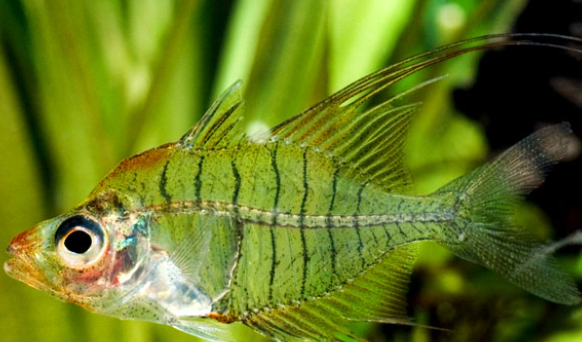
Why choose Glass Lala Fish?
Glass Lala fish not only have a unique appearance and a transparent body color that creates a visual impact, but also provide a rich experience of observation and interaction during their care. They are suitable for intermediate and above aquarium hobbyists, and also provide challenges and learning opportunities for beginners. Compared to larger or more complex species, glass Lala fish are small and lively, and require moderate aquarium space, making them an ornamental fish that combines beauty and maneuverability.
In addition, the colorful effects they present under the reflection of light add a unique artistic atmosphere to modern homes. Whether kept alone or displayed in groups, glass Lala fish can become the focus of the aquarium.
Summary and Thoughts
The glass lala, with its uniquely transparent body, lively personality, and diverse reproductive characteristics, is a unique presence in the world of ornamental fish. Raising a glass lala is not only a delightful experience, but also an interactive experience with a miniature underwater ecosystem. From water quality management and feed selection to environmental design, every step embodies the fusion of science and art. For aquarists seeking visual impact and the joy of caring for aquariums, the glass lala is undoubtedly a worthwhile choice.
When keeping fish, how do you balance fish health with visual appeal? Do you choose naturally transparent glass Lala fish or artificially colored individuals? These choices not only impact the visual experience but also the lifespan and vitality of the fish. For every aquarium enthusiast, how to create an underwater world that is both aesthetically pleasing and desirable is a question worth pondering.
https://www.wonhat.com/the-ultimate-guide-to-ornamental-fish-species-care-and-thriving-aquariums/
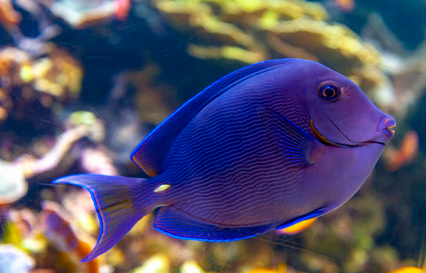
Blue Fantasy: The Visual Feast Brought by the Blue Tang
https://www.wonhat.com/the-ultimate-guide-to-ornamental-fish-species-care-and-thriving-aquariums/
Creating a miniature ocean at home is not only a hobby but also a way to soothe the mind. The Blue Tang, a favorite among aquarium enthusiasts, is like a “little ocean spirit.”
Draped in shimmering blue, it moves gracefully and elegantly; every flick of its tail seems like an underwater dance, bringing a magical visual spectacle to your aquarium.
Let’s explore the unique charm of the Blue Tang in six aspects: appearance, personality, habitat, diet, interaction experience, and viewing enjoyment.
- Captivating Appearance: The Oceanic Blue Gem
The most striking feature of the Blue Tang is its color. Its body displays varying shades of deep blue, and under different lighting, it can shimmer with silvery highlights. Its wide tail fin ripples as it swims, creating the illusion of dancing in the water. Each fish has slightly different blue patterns, making every individual look like a tiny blue gemstone.
Moreover, the Blue Tang’s streamlined body allows it to move quickly and gracefully. Whether gliding through corals or weaving between aquatic plants, it conveys a sense of serene yet lively beauty.
- Personality: Lively and Friendly
Blue Tangs are energetic and curious about their surroundings. They love to swim around the tank, often weaving through decorations or plants with agile movements.
They generally get along well with other fish, though brief interactions may occur when defending territory. Compared to timid species, their curiosity and friendly nature make them the “stars” of any aquarium, both visually appealing and full of vitality.
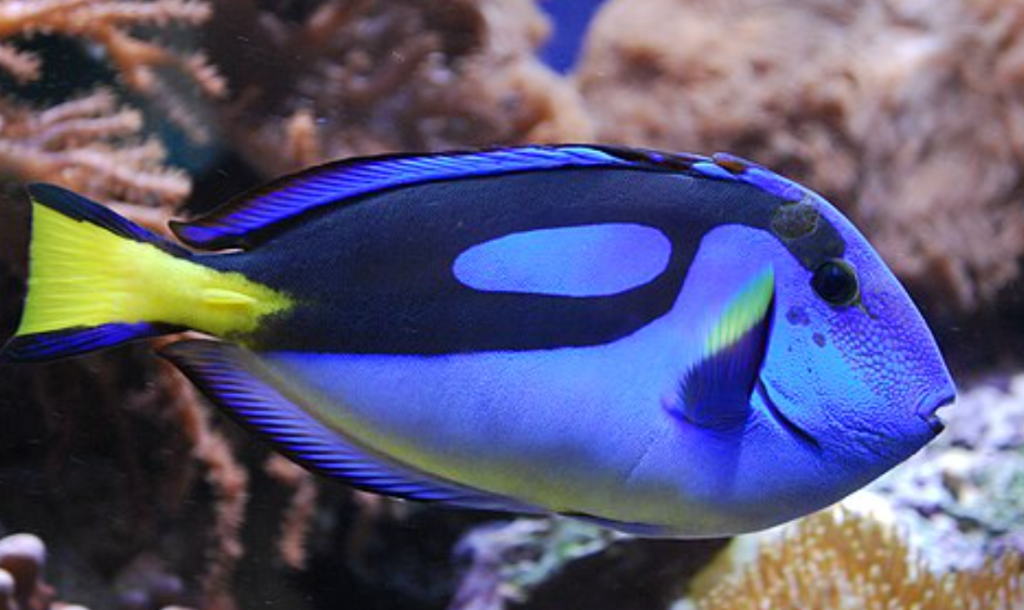
- Habitat: Creating an Ideal Aquarium Space
A proper aquarium environment is essential for the Blue Tang’s health. Maintain water temperatures between 24–28°C (75–82°F) with clean, oxygen-rich water. Regular partial water changes help maintain stable conditions and ensure vibrant coloration.
Tank layout is also important. Blue Tangs enjoy hiding spots and exploration spaces, so include corals, rocks, and plants to allow free movement. Arranging the tank to be both aesthetically pleasing and suitable for their natural behavior will highlight their elegant swimming.
- Diet: Balanced Nutrition is Key
Blue Tangs mainly feed on plankton, algae, and specialized aquarium pellets. Supplementing their diet with high-protein, vitamin-rich flakes ensures health and brilliant coloration.
Feed in moderation to prevent leftover food from polluting the water. Providing natural algae occasionally meets their fiber needs and aids digestion and vitality.
- Interaction: The Joy of Observation and Companionship
Although Blue Tangs cannot interact like cats or dogs, their dynamic movements and agile responses make aquarium life enjoyable. Watching them scramble for food or weave through plants brings calmness and joy.
Observing their lively behavior also sharpens your attention to detail. You notice their movements, color changes, eating habits, and overall health. This careful observation is not only caring for the fish but also a rewarding part of daily life.
- Visual Feast: A Mini Ocean at Home
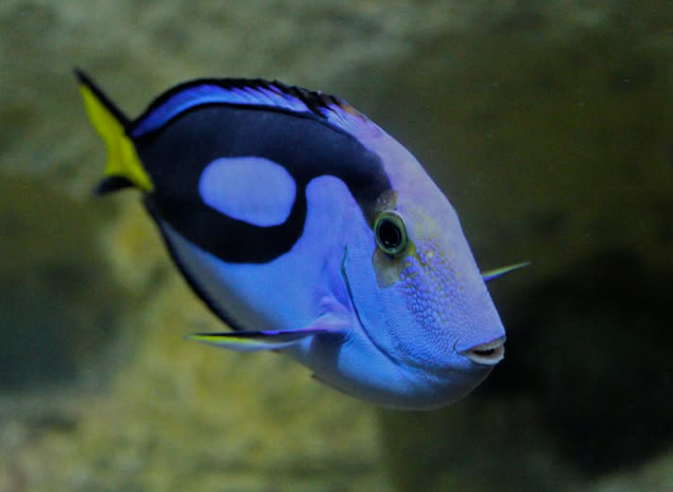
A tank with Blue Tangs feels like a miniature ocean at home. Sunlight or tank lighting highlights their shimmering blue bodies, while plants sway gently and corals dot the scenery, creating a tranquil yet vivid display.
Each glance becomes a feast for the eyes and mind. Whether during a busy workday or a relaxed weekend, watching them glide gracefully and flick their tails provides a sense of serenity and small daily joys.
- Conclusion
The Blue Tang is not just a beautiful aquarium fish but also a “little artist” in daily life. It teaches observation, care, and patience, helping us find calm and joy amidst a busy life.
With proper care, feeding, and attentive observation, the Blue Tang’s elegant movements and shimmering colors provide a daily visual feast, bringing vibrancy and life to your aquarium.
Living with Blue Tangs makes your home feel like a miniature ocean, where every moment is filled with wonder and beauty.
https://www.wonhat.com/the-ultimate-guide-to-ornamental-fish-species-care-and-thriving-aquariums/
Dancing with the Blue Devil Fish: Little Joys in Aquarium Life
https://www.wonhat.com/the-ultimate-guide-to-ornamental-fish-species-care-and-thriving-aquariums/
Have you ever imagined having a tiny ocean world right in your home? The blue devil fish, with its vibrant colors and graceful movements, has become increasingly popular among aquarium enthusiasts. Watching them shimmer in a tank brings unexpected joy—it’s like dancing with the ocean without leaving your living room.
1. The Allure of the Blue Devil Fish
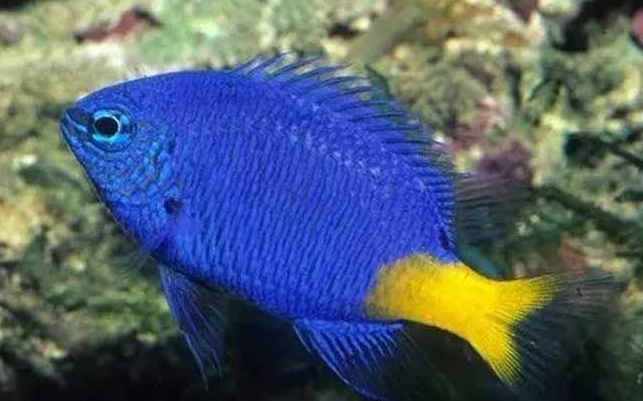
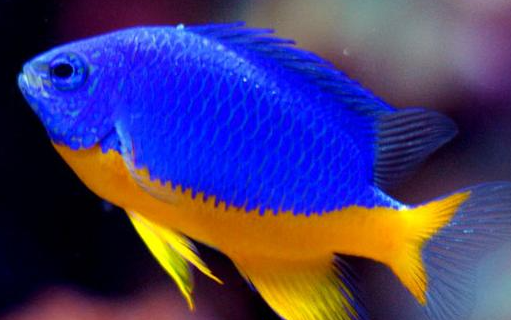
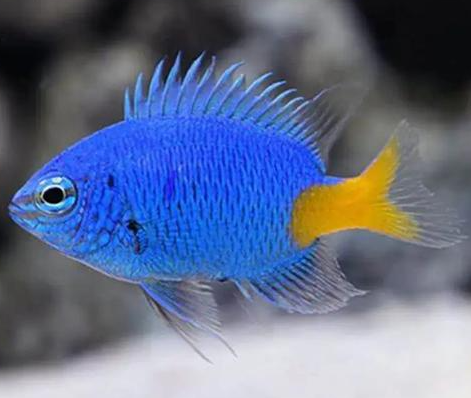
The blue devil fish is famous for its deep blue hue and streamlined body. When it swims, its fins flutter like wings, creating the illusion of an elegant underwater dance. Whether gliding alone or weaving through aquatic plants, it’s hard not to be captivated by its movements.
Beyond their stunning appearance, blue devil fish have playful, curious personalities. They love exploring their surroundings, swimming around plants and decorations, and even occasionally responding to their owner’s gaze. These tiny interactions create a sense of connection that feels surprisingly personal.
2. The Interactive Experience
Keeping fish isn’t just about admiring their colors or watching them swim—it’s a form of observation and companionship. Blue devil fish are agile and quick to react. When you approach the tank, they often swim toward you, curiously checking out the world outside the glass.
Feeding time is a particularly engaging experience. When you sprinkle food, the fish dart forward like little dancers, competing for the treat. Their bursts of energy and liveliness can instantly brighten your mood. Over time, observing them becomes a daily ritual—watching them glide in the morning or spin gracefully in the evening can wash away stress and fatigue.
3. Aquarium Care Tips
To truly enjoy life with blue devil fish, proper care is essential. Water quality and environment are critical. These fish thrive in clean, warm water, ideally between 24–28°C (75–82°F). Regular water changes and stable water conditions help keep them healthy and active.
Aquascaping also plays an important role. Blue devil fish enjoy tanks with plants, rocks, and hiding spots where they can swim, hide, and explore. Thoughtful tank arrangements not only stimulate their activity but also enhance the viewing experience.
When it comes to feeding, they prefer floating foods and pellets, given once or twice daily. Observing their appetite and activity levels allows you to adjust portions, ensuring they get proper nutrition without compromising water quality.
4. Little Joys from Aquarium Life
Every day spent with blue devil fish is a unique experience. Watching their smooth, flowing movements brings a sense of calm and healing. After a busy day, quietly observing the tank can be therapeutic, helping to ease anxiety and fatigue.
Caring for the fish—adjusting water temperature, cleaning the tank, and monitoring their health—also cultivates patience and attention to detail. Over time, you may find yourself more mindful and attentive in daily life as well.
5. Daily Delight in Dancing Together
The pleasures of keeping blue devil fish extend beyond visual appeal. Their swimming rhythms, curiosity, and small interactive behaviors can become little surprises that brighten your everyday life.
Imagine sunlight streaming into your living room, blue devil fish shimmering in the water as plants sway gently—like a miniature underwater dance unfolding before your eyes. This sense of ritual transforms your home into a tiny natural haven.
6. Conclusion
Blue devil fish are not just beautiful aquarium pets—they are little “life coaches.” They teach observation, patience, and attentiveness, providing moments of tranquility amid a fast-paced world. Feeding them, watching them, and simply enjoying their graceful presence can be a small but meaningful joy.
Having a blue devil fish at home isn’t just about adding an ornamental creature; it adds color and rhythm to your life. Whether on a hectic workday or a relaxed weekend, watching them glide effortlessly brings a simple, genuine happiness. Let’s gather in front of the aquarium and dance with the blue devil fish, savoring the little joys of life.
https://www.wonhat.com/the-ultimate-guide-to-ornamental-fish-species-care-and-thriving-aquariums/
“Little Knights of the Ocean”: The Secret Life of Seahorses
https://www.wonhat.com/unique-aquatic-wonders-a-guide-to-marine-and-freshwater-marvels/
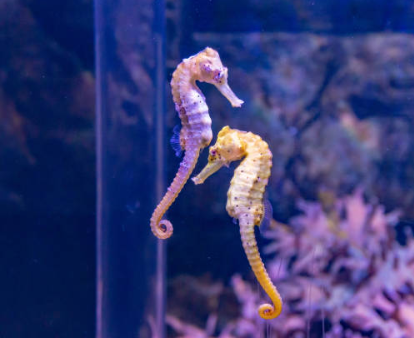
When you think of seahorses, you probably imagine those slow-swimming, super cute little fish darting among the seaweed, right? That’s right—seahorses are a very special kind of fish in the ocean. With their horse-like heads and unique swimming style, they look charming and have earned the nickname “little knights of the sea.”
Today, let’s dive into the daily lives of these little ocean knights.
1. Distinct Appearance: The Charming “Armored Knights”
Seahorses are easy to recognize: their heads resemble horses, and their bodies are covered in a tough, bony ring armor, almost like they’re wearing a suit of armor. This armor not only protects them from predators but also gives them a slow and graceful way of moving, quite different from other fish.
Don’t be fooled by their slow swimming—their tails are incredibly strong and prehensile. Seahorses use their tails to tightly grip onto seaweed or coral to avoid being swept away by currents, just like knights holding their reins firmly and steadily.
2. The Amazing “Pregnant Dad” Story
The biggest secret about seahorses is their unique parenting—male pregnancy! Yes, you heard that right, it’s the seahorse dads who are the real “expecting parents.”
After the female lays eggs, she deposits them into the male’s brood pouch on his belly. The dad then protects the eggs and supplies oxygen and nutrients.
After about 2 to 4 weeks, the little babies hatch and swim off into the ocean. This rare male pregnancy is a true miracle in the natural world, making seahorses one of the ocean’s wonders.
3. Slow and Steady, Yet Master Hunters
Seahorses swim slowly but they’re no pushovers. Their mouths act like straws, quickly sucking in tiny shrimp, plankton, and other small prey. They mainly hunt by patiently lying in wait, using a “hide-and-ambush” tactic.
Blending with their environment thanks to their camouflaging colors, they avoid detection by predators and sneak up on prey, swiftly inhaling them. Their hunting efficiency is surprisingly high despite their slow speed.
4. Masters of Camouflage
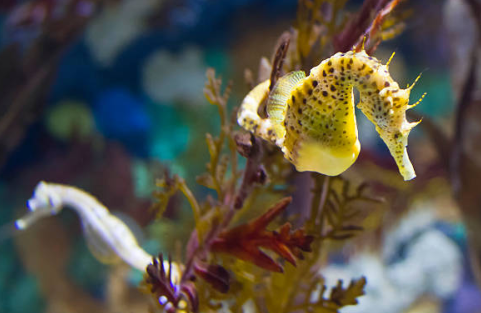
Seahorses can change their body colors to match their surroundings—from bright yellows and oranges to deep browns or even translucent shades—helping them hide from predators.
This color-changing ability also plays a role in courtship. Their mating dances are quite complex, with two seahorses shifting colors in sync as a form of “conversation” to attract each other.
5. Small and Fragile, Needing Careful Protection
Though their “armor” looks tough, seahorses are small and slow, facing many predators and survival challenges.
They mainly live in coral reefs, seagrass beds, and mangroves—places that offer lots of hiding spots and food but are increasingly threatened by environmental damage.
Protecting these habitats is key to ensuring these little knights can keep swimming freely in the ocean.
6. Seahorses and Humans: A Fascinating Connection
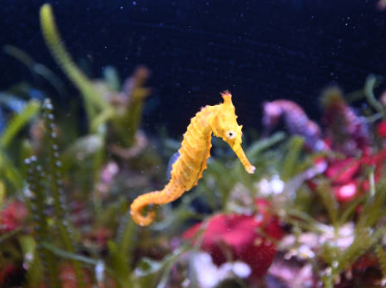
In human culture, seahorses symbolize strength, patience, and protection. In some places, they are seen as lucky charms.
Today, as ocean conservation awareness grows, more people pay attention to seahorse ecology and protection. Seahorses have also become stars in ocean-themed aquariums, captivating countless visitors.
Summary
Seahorses, these “little knights of the ocean,” with their unique shape and magical lifestyle, show us the wonders and diversity of nature. They remind us that protecting the ocean means safeguarding not only the homes of creatures but also this unique beauty and mystery.
Next time you dive underwater or see seahorses in an aquarium, don’t forget—these little knights hold many untold stories waiting for you to discover.
https://www.wonhat.com/unique-aquatic-wonders-a-guide-to-marine-and-freshwater-marvels/
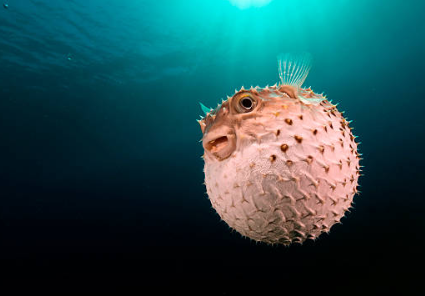
Can You Keep a Pufferfish as a Pet? Must-Know Tips for Beginners
https://www.wonhat.com/the-ultimate-guide-to-specialized-aquatic-pets-mastering-pufferfish-and-kohaku-koi-care/
When people think of pufferfish, the first image that often comes to mind is a cute, round little fish puffing itself up into a ball.
With their big eyes and innocent expressions, even just lazily swimming around in a tank, they can easily melt your heart.
But here’s the question: Can you really keep a pufferfish as a pet?
The answer is—yes, you can.
However, it’s not as easy as keeping goldfish or guppies. If you want to keep one happy and healthy, you’ll need to be well-prepared.
Why Do People Want to Keep Pufferfish?
The charm of a pufferfish lies in its unique appearance and personality.
When startled or stressed, they can quickly suck in a large amount of water (or air) and inflate into a round ball—a transformation that’s both adorable and fascinating to watch.
Pufferfish are also curious and interactive. Over time, they may recognize their owner and even swim over to “greet” you when you approach the tank.
That said, caring for a pufferfish comes with its own special needs and potential risks.
Pufferfish Personality Traits
Smart and Curious – They’re quick to investigate new things in their environment and will gradually get used to your presence.
A Bit Aggressive – Not exactly the “peaceful, friendly” type; they may nip at the fins of other fish, so tank mates must be chosen carefully.
Independent – They don’t necessarily need companions and can do just fine living alone.
Types of Pufferfish
Not all pufferfish are saltwater fish. They generally fall into three categories:
Freshwater Pufferfish – Easier for beginners, such as the small Green Spotted Puffer or Dwarf Puffer.
Brackish Water Pufferfish – Require a specific salinity level, like the Figure Eight Puffer.
Saltwater Pufferfish – Require more complex care, suitable for experienced aquarists.
For beginners, it’s best to start with freshwater or brackish pufferfish—they’re easier to maintain and don’t require a full marine setup.
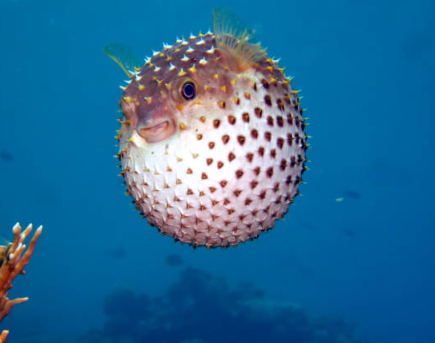
Beginner’s Guide to Keeping Pufferfish
1. Provide Enough Space
Even though some pufferfish are small, they still need plenty of swimming room.
Small freshwater species: at least a 40–60 liter (10–15 gallon) tank.
Medium to large species: ideally 100 liters (25+ gallons) or more.
A cramped tank can make them stressed and more prone to illness.
2. Keep the Water Clean
Pufferfish are sensitive to water quality, especially ammonia and nitrite levels, which should be as close to zero as possible.
A strong, stable filtration system is essential, and you should change 20–30% of the water weekly.
For brackish or marine species, monitor salinity closely. Tip: cycle your tank before introducing a pufferfish to ensure stable water conditions.
3. Feed Them Properly
Pufferfish are carnivores and prefer live or frozen meaty foods, such as:
Small shrimp
Snails
Clam meat
Earthworms
These foods not only provide nutrition but also help keep their constantly growing teeth worn down. Without proper wear, their teeth can overgrow and make eating difficult.
4. Be Careful with Tank Mates
Two main issues in mixed tanks:
Pufferfish may nip at other fish’s fins.
Overly active fish can stress pufferfish out.
If you must keep them with other fish, choose fast swimmers that don’t share the same swimming area—or better yet, keep pufferfish alone.
5. Mind Their Toxicity
While most pet pufferfish aren’t highly toxic, some—especially wild-caught ones—can still carry tetrodotoxin (TTX).
Avoid handling them directly.
Never eat a pufferfish you’ve kept as a pet.
Wear gloves when cleaning the tank to prevent injury or infection.

The Joy of Keeping Pufferfish
Full of Personality – They’re not “blank-faced” like some fish; they display emotions and reactions.
Interactive – Over time, they may actively swim up to you.
Visually Charming – Watching them puff up is truly a “wow” moment.
Challenges and Responsibilities
The biggest challenges in keeping pufferfish are maintaining water quality and providing the right diet.
If you’re looking for a casual, low-maintenance fish, pufferfish may not be the best choice.
But if you’re willing to put in the time and learn, they can be one of the most rewarding aquatic pets you’ll ever keep.
Conclusion
Yes—pufferfish can be kept as pets, if you’re committed to caring for them properly.
Keep these three golden rules in mind:
Start with beginner-friendly species (freshwater or brackish).
Water quality is the lifeline—never neglect it.
Respect their nature; don’t treat them like toys.
Do this, and you’ll enjoy a unique and delightful companionship with your “little shape-shifting cutie,” watching it thrive happily in your aquarium.
https://www.wonhat.com/the-ultimate-guide-to-specialized-aquatic-pets-mastering-pufferfish-and-kohaku-koi-care/
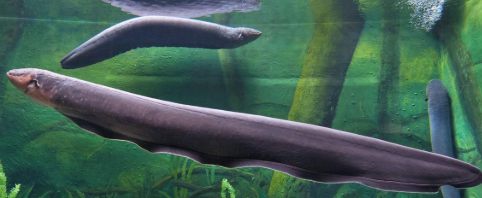
Underwater Hunting Master: How the Electric Eel Uses Electricity to Subdue Its Prey
https://www.wonhat.com/unique-aquatic-wonders-a-guide-to-marine-and-freshwater-marvels/
When it comes to creatures that can “generate electricity” in the water, most people immediately think of the electric eel.
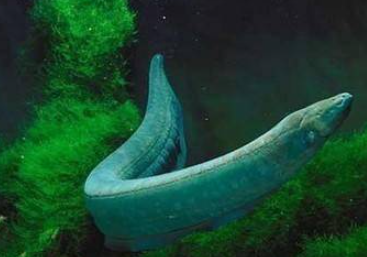
It may look ordinary at first glance—a long, grayish, unremarkable body—but in reality, it’s like a super-powered arsenal of the freshwater world.
Electric eels can generate electricity using their own bodies, and their voltage is so high that it can instantly stun their prey—just like someone suddenly cutting the main breaker in your house.
Today, let’s talk about how electric eels use electricity to take down their prey.
Meet the Electric Eel: Plain Looks, Extraordinary Power
Electric eels mainly live in the Amazon Basin of South America and have been residents there for ages.
Despite its name, the electric eel isn’t actually an eel—it’s more closely related to knifefish and arowana.
Its body is long and slender, reaching up to two meters in length and weighing up to 20 kilograms—like a living underwater power cable.
Here’s the fascinating part: almost the entire body of an electric eel is like a power plant.
Its electric cells (called electrocytes) are arranged in large “battery packs,” making up over 80% of its body length.
While other fish use their muscles for swimming, the electric eel uses its muscles… to generate electricity.
How Powerful Is Its “Charge”?
Many people wonder how strong an electric eel’s discharge really is.
The answer: extremely powerful.
An adult electric eel can generate between 600 and 800 volts, with some recorded cases exceeding 860 volts—several times higher than the voltage of a household outlet (220 volts).
And it can keep the discharge going for several hundred milliseconds, leaving prey completely paralyzed with no chance of escape.
Electric eels have two modes of discharge:
Low-voltage mode – Used to sense the surrounding environment, like a radar.
High-voltage mode – Used to unleash a full-force attack, putting prey into an instant “shutdown” state.
The Hunting Process: Scan First, Then Strike
Electric eels don’t just blast out electricity blindly—they’re smart hunters. Here’s their usual hunting sequence:
1. Radar Scan
The eel emits low-voltage pulses to probe its surroundings.
Since water conducts electricity, any movement from another creature disturbs the electric field, allowing the eel to pinpoint the prey’s location.
2. Target Lock
Once it detects a target, it approaches slowly to avoid startling it.
Sometimes, the eel will use its body to corral the prey into a smaller area.
3. High-Voltage Ambush
When the target is within striking range, the eel releases a powerful high-voltage shock.
This causes the prey’s muscles to contract instantly, freezing it in place.
4. The Final Bite
Before the prey recovers, the eel grabs it with its strong jaws and swallows it whole.
With sharp teeth and a strong bite, it can take down small fish, shrimp, and even small turtles.

Electricity Beyond Hunting
An electric eel’s electrical ability isn’t just for catching food. It also uses electricity for:
Defense – Against predators like large fish or caimans, delivering a warning shock to drive them away.
Communication – Sending low-voltage electrical signals to other eels, like secret codes.
Navigation – In murky waters, its electric “radar” works better than vision.
Can an Electric Eel Kill a Human?
This is a question many people ask.
In theory, a high-voltage discharge from a large adult electric eel can be dangerous to humans—especially if shocked repeatedly in the water.
It can cause muscle paralysis, drowning, or even cardiac arrest.
However, wild electric eels generally don’t attack humans unless provoked or threatened.
What Humans Have Learned from Them
Scientists have long studied electric eels for their impressive ability to generate and control electricity with high efficiency.
This research could inspire advances in better batteries, bio-electric power sources, and even bio-inspired robotics.
Conclusion
The electric eel is like a high-voltage predator of the aquatic world.
It doesn’t rely on speed to catch its prey but instead uses its unique electrical attack to instantly disable its target—a hunting strategy almost unmatched among freshwater creatures.
So, next time you’re exploring the Amazon and happen to see one, keep a safe distance—this underwater hunting master’s electricity is no joke.
https://www.wonhat.com/unique-aquatic-wonders-a-guide-to-marine-and-freshwater-marvels/
Discus Fish: The Colorful Dancers of the Aquarium
https://www.wonhat.com/the-ultimate-guide-to-ornamental-fish-species-care-and-thriving-aquariums/
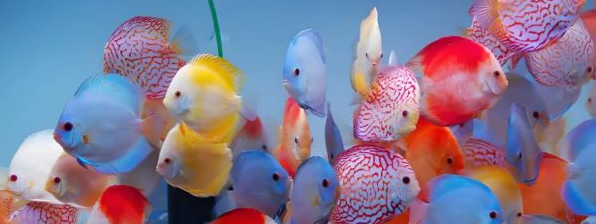
If you’re even a little familiar with tropical fish, you’ve probably heard of the discus fish. These stunning swimmers are true superstars of the aquarium world. With their vibrant colors and graceful movements, it’s hard not to stare at them every time you pass by the tank.
But what exactly makes discus fish so captivating? Let’s take a closer look at why they’ve earned the nickname “the dancers of the aquarium.”
1. Stunning Looks That Steal the Show
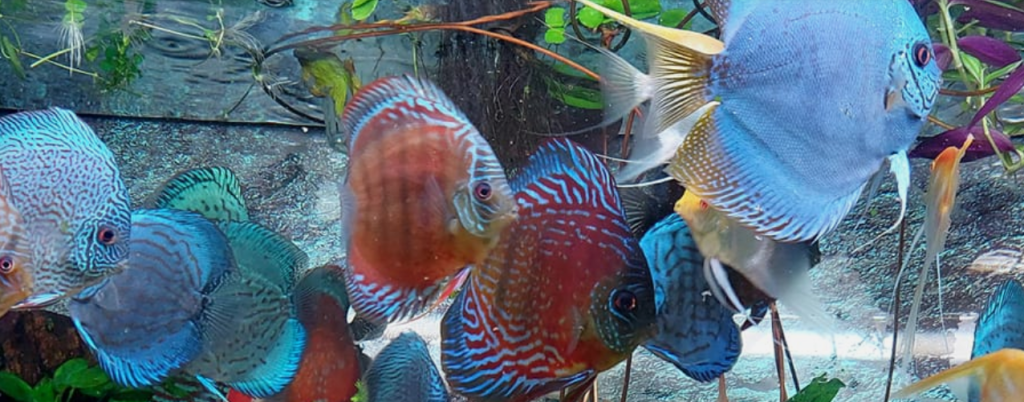
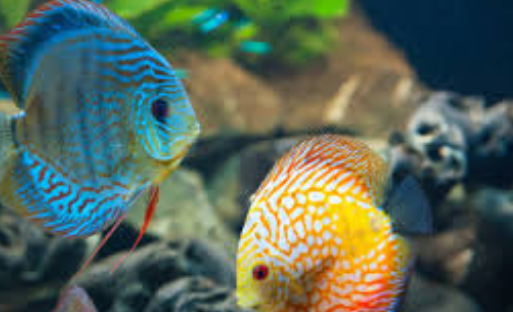
Just from the name “discus fish,” you can guess that they’re colorful—and they don’t disappoint. Their bodies are sleek and round, gliding through the water like they’re waltzing in a slow-motion dance. Red, blue, green, yellow, and even purple hues shimmer across their scales, often all on the same fish!
Their dorsal and tail fins often show off different shades depending on the lighting, giving them an almost magical, color-shifting effect. The way they move—gracefully twisting and turning among plants—makes it feel like you’re watching a water ballet.
2. Gentle Nature & Social Habits
Discus fish may look flashy, but personality-wise, they’re quite peaceful and gentle. They love company and thrive in groups, so if you’re planning to keep them, make sure you get a few rather than just one. A spacious tank is key—they need room to move and interact.
They’re also picky about their living conditions. Discus fish prefer warm, clean water, with temperatures between 24–28°C (75–82°F), and a pH of around 6.5 to 7.5. A high-quality filtration system is essential to keep the water clear and their colors vibrant.
They also love planted tanks with rocks or decorations that give them places to hide and feel secure. A natural, peaceful environment helps them feel at ease.
3. Caring for Discus Fish: Tips for Beginners
At first, keeping discus fish might seem intimidating, especially with their reputation for being a bit “high-maintenance.” But with the right setup and a little routine, it’s totally doable—even for beginners!
① Water Quality Matters Most
Clean water is everything for discus fish. Regular water changes (about 20–30% weekly) help prevent the buildup of organic waste. Use water testing kits to check temperature, pH, and hardness regularly to stay in the right range.
② Feeding Time
Discus fish are omnivores. They eat pellets or flakes, but also enjoy live or frozen foods like bloodworms, brine shrimp, or daphnia. Feed them 2–3 times a day in small amounts to avoid leftover food polluting the water.
③ Keep It Warm and Oxygenated
Use a heater to maintain a stable temperature—especially in colder months. They also need good aeration, so a reliable air pump or surface movement is a must to keep oxygen levels up.
④ Don’t Overcrowd the Tank
Each discus fish needs about 30–40 liters (8–10 gallons) of water. A crowded tank can stress them out and make them more prone to illness, so give them space to swim freely and comfortably.
4. Breeding Discus Fish
Thinking about breeding discus fish? It’s definitely possible, but it does require a bit of extra care. Warm, stable water (around 28°C or 82°F) and a clean tank are essential for breeding success.
Typically, a female will lay eggs on a flat surface like a plant leaf or smooth rock, and the male will fertilize them. After about 2–3 days, the eggs hatch into tiny fry. At first, the babies are super small and need very fine food like microalgae or infusoria to grow strong and healthy.
5. Keeping Them Healthy
To keep your discus fish in tip-top shape, health monitoring is key. Watch out for signs like loss of appetite, dull colors, or sluggish swimming—these may indicate stress or illness.
Common issues include bacterial infections, parasites, and digestive problems, often triggered by poor water conditions. So, staying on top of tank maintenance and observing your fish daily will help you catch problems early.
In Summary
Discus fish are more than just eye candy for your aquarium—they’re living art. Their graceful movements, vibrant colors, and gentle personalities bring joy and calm to any space.
With the right care, you can raise healthy, happy discus fish and turn your tank into a dazzling underwater stage. Whether you’re new to fishkeeping or a seasoned aquarist, these colorful dancers are sure to win your heart.
https://www.wonhat.com/the-ultimate-guide-to-ornamental-fish-species-care-and-thriving-aquariums/
From Finding Nemo to Real Life: Meet the True Clownfish
https://www.wonhat.com/the-ultimate-guide-to-ornamental-fish-species-care-and-thriving-aquariums/
If you grew up watching Finding Nemo, chances are you fell in love with that little orange-and-white fish named Nemo—brave, cheeky, and clever. Nemo made clownfish famous, and many of us started wondering: what are clownfish really like?
As it turns out, real-life clownfish do share some similarities with their animated counterpart, but there are also some big differences. Let’s dive into the world of real clownfish and discover what makes them such fascinating ocean creatures.
1. What Do Clownfish Look Like?
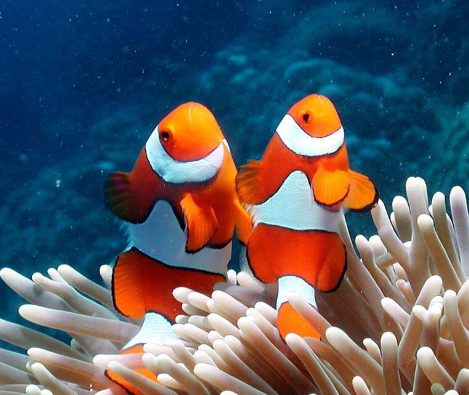
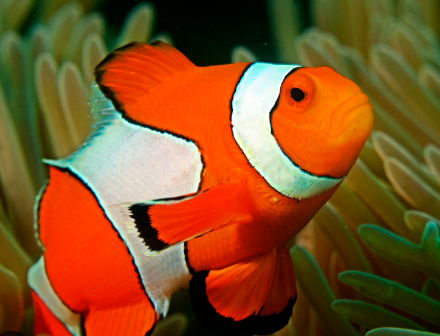
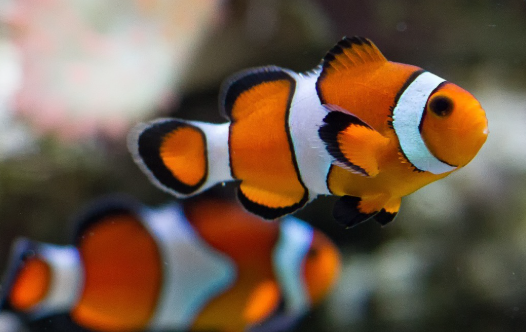
The first thing people notice about clownfish is their bright, striking color. Typically orange with white bands outlined in black, clownfish are hard to miss. These markings aren’t just for looks—they help clownfish recognize each other in the reef.
Clownfish are small, usually only 6 to 10 centimeters (about 2.5 to 4 inches) long. Their petite size makes them well-suited for life among sea anemones and coral reefs.
2. Where Do Clownfish Live?
In the wild, clownfish are found in warm tropical waters, especially around coral reefs in the Indo-Pacific region. Unlike in the movies where they seem to swim freely all the time, clownfish mostly stay close to home—specifically, inside sea anemones.
Now here’s the twist: sea anemones are actually quite dangerous. Their tentacles contain venom used to catch prey. But clownfish are special—they’ve formed a symbiotic relationship with sea anemones. The clownfish live among the stinging tentacles, protected from predators, and in return, they defend the anemone from invaders and help clean up leftover food.
It’s a win-win partnership that’s quite common in reef ecosystems. Thanks to this bond, clownfish avoid predators and sea anemones get a little help with housekeeping.
3. What Do Clownfish Eat?
Clownfish are omnivores, meaning they eat a mix of plants and animals. Their diet includes plankton, small algae, and tiny ocean critters. In the wild, they dart around the sea anemone to find food in nearby crevices, using their agility and small size to reach tricky spots.
In home aquariums, clownfish usually eat marine fish pellets, freeze-dried algae, and small crustaceans like brine shrimp. They’re not picky, but they do best with regular meals and a clean, stable environment. And while they can survive without anemones, they really thrive when they have one nearby.
4. How Do Clownfish Reproduce?
Clownfish have a pretty amazing reproductive system. They lay eggs on hard surfaces near their sea anemone “home,” and the male is usually the one who guards the eggs until they hatch.
Here’s the wild part—clownfish can change sex! In a breeding pair, the larger fish is always the female, and the smaller one is the male. If the female dies or disappears, the male will actually transform into a female and continue the breeding cycle with a new male.
This gender-switching ability is a survival strategy that helps clownfish keep reproducing even in small or isolated environments.
5. Clownfish and Humans
Thanks to their vibrant colors and friendly appearance, clownfish are favorites among aquarium enthusiasts and ocean lovers. You’ll find them in aquariums all over the world—and yes, they’ve become beloved pets for many people.
But don’t be fooled by how easy life looks in Finding Nemo. In the real ocean, clownfish face serious threats, like pollution, habitat loss, and climate change.
That’s why it’s important to enjoy clownfish responsibly. Whether you’re keeping them in a tank or just admiring them in the wild, do your part to protect their environment and avoid disturbing their natural habitat.
6. Final Thoughts
From animated films to real reefs, clownfish have captured our hearts with their charm and resilience. They’re not only adorable—they’re also a key part of the coral reef ecosystem.
By learning more about their behavior, needs, and natural environment, we can better appreciate these small but mighty fish—and hopefully be inspired to help protect the oceans they call home.
https://www.wonhat.com/the-ultimate-guide-to-ornamental-fish-species-care-and-thriving-aquariums/
A Complete Guide to Kohaku Koi: From Selection to Care
https://www.wonhat.com/the-ultimate-guide-to-specialized-aquatic-pets-mastering-pufferfish-and-kohaku-koi-care/
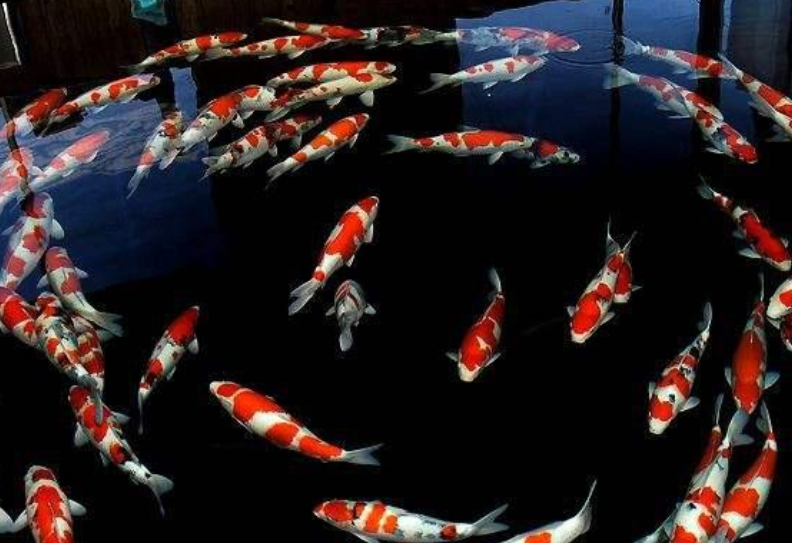
When people think of koi fish, the image that often comes to mind is a graceful, vibrant fish gliding through the water. Among the many koi varieties, Kohaku koi—with their striking red-and-white coloration—are undoubtedly one of the most iconic and beloved types. Their elegant appearance and symbolic meanings of luck and prosperity make them a favorite among koi enthusiasts.
If you’re thinking about keeping a Kohaku koi, this guide is for you. From choosing the right fish to creating the ideal environment and ensuring proper care, here’s how to help your Kohaku koi thrive and stay beautiful.
1. How to Choose a Healthy Kohaku Koi
Picking out a Kohaku koi isn’t as simple as selecting a pretty one at random. The fish’s appearance and health will directly impact its long-term well-being and aesthetic appeal. Here’s what to look for when choosing:
1. Balanced Body Shape
A healthy Kohaku koi should have a well-proportioned, full body with no signs of deformity or weakness. Watch how it swims—strong, steady movement is a good sign.
2. Smooth, Shiny Scales
The koi’s scales should be complete, shiny, and uniform. Missing or damaged scales may indicate past injuries or illness.
3. Distinct, Vibrant Colors
A good Kohaku has clear and contrasting red (hi) and white (shiroji) areas. The red should be deep and rich, while the white should be clean and snow-like. Avoid fish with dull, faded, or yellow-tinted colors.
4. Bright, Clear Eyes
Healthy koi have clear, alert eyes. Cloudiness, spots, or dullness in the eyes can be signs of illness.
5. No Wounds or Parasites
Check for unusual spots, sores, or parasites on the fish’s body. A clean, blemish-free appearance is ideal.
Tip: Always purchase from a reputable breeder or aquarium shop. This ensures you’re getting healthy, well-cared-for fish.

2. Creating the Right Environment for Kohaku Koi
Once you’ve chosen your koi, you’ll need to provide a comfortable and clean environment. Kohaku koi can be sensitive to poor conditions, so setting things up properly is crucial.
1. Water Quality
Clean, stable water is essential. High levels of ammonia or nitrates can harm or even kill koi. Maintain a pH level between 7.0 and 8.0. Change 25%–33% of the water regularly to keep it fresh and balanced.
2. Ideal Water Temperature
Kohaku koi thrive in water between 18°C to 24°C (64°F–75°F). Use aerators or water pumps in summer to keep the water cool, and consider heaters in winter to prevent drops that could cause stress or illness.
3. Sufficient Space
Kohaku can grow quite large, so they need plenty of room to swim. A pond at least 60 cm (24 inches) deep or an aquarium of 150 liters (40 gallons) or more is recommended. Cramped conditions can stunt growth and affect health.
4. Strong Filtration System
Because koi eat a lot and produce significant waste, a strong filter is a must. Use an external filter or a powerful pump system to keep the water clean and oxygen-rich.
3. Feeding Your Kohaku Koi
A proper diet is key to keeping your koi healthy, vibrant, and resistant to disease. Kohaku koi are omnivores and benefit from a varied, well-balanced diet:
1. High-Quality Pellet Food
Choose koi-specific pellets that contain a good mix of protein, vitamins, and minerals. In spring and fall, opt for higher-protein feed to support growth and activity. In summer, switch to lighter feed to aid digestion in warmer water.
2. Live Foods
Occasionally offer live treats like water insects or snails. These encourage natural hunting behaviors and add variety.
3. Vegetables
Boiled spinach, lettuce, or peas can provide fiber and help with digestion.
4. Feed in Moderation
Koi have big appetites, but overfeeding can pollute the water. Feed 2–3 times per day, giving only what they can eat within 5 minutes each time.
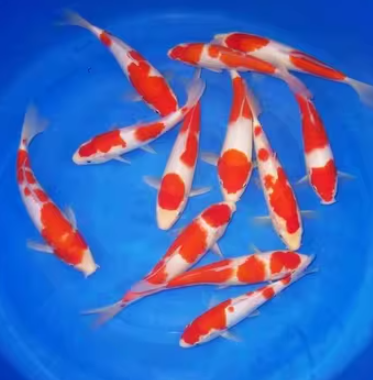
4. Common Kohaku Koi Problems and Solutions
Even with the best care, koi keepers may encounter some challenges. Being aware of potential issues can help you respond quickly:
1. Poor Water Quality
This is the most common cause of koi illness. Keep a regular cleaning schedule, check water parameters often, and clean or replace filters when needed.
2. Loss of Appetite
If your koi stops eating, check for stress factors: improper temperature, dirty water, or illness. Observe behavior and adjust care accordingly.
3. Spots or Sores on the Body
These could be signs of a bacterial infection or parasites. Isolate the sick fish and treat with appropriate medication recommended for koi.
5. Final Thoughts
Kohaku koi are not only beautiful but also rewarding to keep. With the right selection, a suitable environment, and thoughtful care, your koi will thrive and become a stunning living centerpiece in your pond or aquarium.
Caring for koi is a journey that requires patience and attention, but the joy of watching them glide gracefully through the water makes it all worthwhile.
https://www.wonhat.com/the-ultimate-guide-to-specialized-aquatic-pets-mastering-pufferfish-and-kohaku-koi-care/
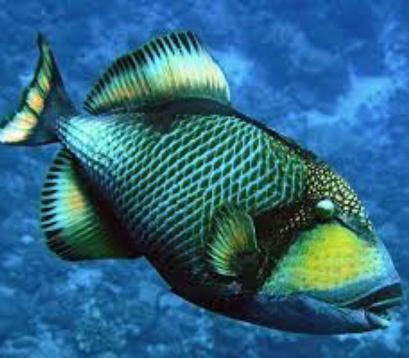
The Bossy Fish of the Reef: Just How Territorial Are Triggerfish?
https://www.wonhat.com/the-ultimate-guide-to-ornamental-fish-species-care-and-thriving-aquariums/
In the colorful world beneath the waves, if there’s one fish with a serious sense of “personal space,” it’s the triggerfish. These guys may not be the biggest in the sea, but their personalities? Big enough to fill the whole reef. With their striking appearance and strong opinions, triggerfish totally live up to their nickname—the “CEO” of the ocean.
So, What Exactly Is a Triggerfish?
Triggerfish, known by their scientific nickname Triggerfish (yeah, that’s the actual English name too), have a cool trick up their fins. Their first dorsal spine can “lock” into place like a trigger—hence the name. This built-in mechanism helps them wedge into rocks to sleep or defend themselves against predators. Pretty clever for a fish, right?
Their bodies are oval and laterally compressed, and they come in a variety of flashy colors and patterns. Some common types are the Yellowfin Triggerfish, Picasso Triggerfish, and Blue-lined Triggerfish. They’re basically swimming artwork—and it’s no wonder aquarium lovers are obsessed with them.
Bad Temper, But Surprisingly Smart
Triggerfish aren’t just good-looking—they’re also known for their tempers. Their territorial instincts are intense. If anything—fish, diver, even your shadow—comes within a meter of their turf, they’ll charge without hesitation.
But here’s the twist: they’re smart. Some captive triggerfish can recognize their feeder, respond to movement outside the tank, and even learn to open shells or sea urchins to get at the tasty bits inside. Not every fish can say it uses tools!
The Diver’s “Nightmare”
Ask any scuba diver, and they’ll likely have a triggerfish story. You’re swimming along, enjoying the coral and colorful fish, when—boom—a fish comes zooming at your face like an underwater missile. That’s a triggerfish telling you: “Get out of my neighborhood.”
During breeding season (usually late spring to early summer), they get extra protective. Males guard the nest tirelessly and will attack anything that gets too close. Their attack style is smart too—they don’t just rush head-on. They circle you first, then come from below in a surprise upward strike. It’s basically a sneak attack—ocean style.
The “Boss” of the Fish Tank
In home aquariums, triggerfish aren’t for beginners. Sure, they’re beautiful and interesting, but put them with the wrong tankmates, and you’ve basically handed them the role of tank tyrant. Smaller or gentler fish might end up stressed out and hiding all day.
Large species like the Queen Triggerfish or Blue-lined Triggerfish are especially aggressive. But if your tank is big enough, and you pair them with other semi-aggressive fish like clownfish or angelfish, things can work out. Just don’t put them in with shy or delicate species—they’ll definitely get bullied.
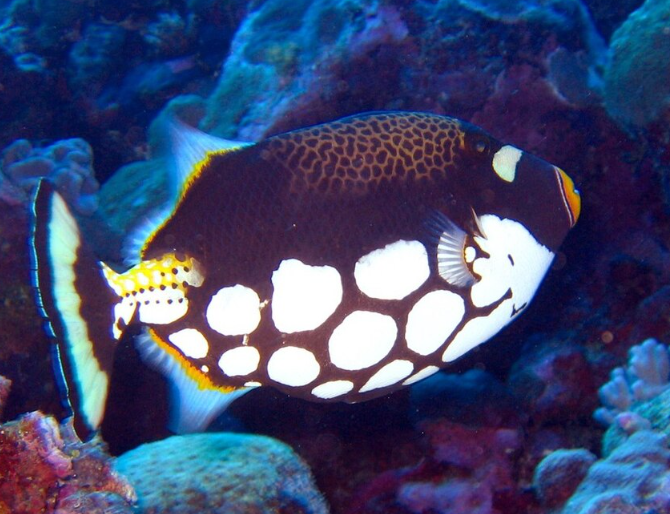
Why So Protective?
From an evolutionary point of view, their bossy attitude makes sense. Triggerfish usually build nests in reef crevices, where they lay their eggs. The males then guard the site 24/7, chasing off any intruders to protect their future babies. This makes them excellent “guardians” in the reef ecosystem.
Fun fact: Their attack zone is cone-shaped and goes upward, not straight. So if one starts coming at you underwater, don’t swim sideways—dive down toward the seabed. The closer you are to the bottom, the harder it is for them to hit you. It’s a cool tip that might actually save your fins someday!
In Summary
Triggerfish are full of personality—flashy, intelligent, and fiercely protective. Sure, they’ve got a temper, but that’s part of what makes them stand out in the reef. If you’re into animals that are a little bit rebellious, a little bit bold, and a whole lot clever, you’ll definitely remember the triggerfish.
So next time you’re snorkeling or visiting an aquarium, keep an eye out for this “underwater boss.” And hey, if you’re thinking of keeping one in a tank, make sure you do your homework—this fish doesn’t play around!
https://www.wonhat.com/the-ultimate-guide-to-ornamental-fish-species-care-and-thriving-aquariums/
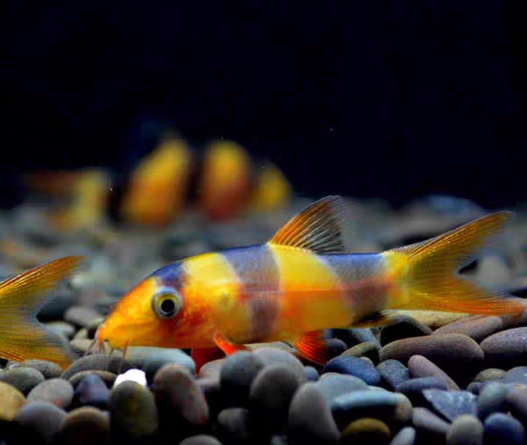
Colorful Clown of the Water – The Fun Life of the Clown Loach
https://www.wonhat.com/the-ultimate-guide-to-ornamental-fish-species-care-and-thriving-aquariums/
When it comes to the most entertaining “stars” in an aquarium, the clown loach definitely steals the show. With their bright orange and black stripes and playful behavior, they’re like little clowns swimming around, bringing tons of joy to your fish tank. Today, let’s dive into the fun and fascinating life of the colorful clown loach and see just how cute and amusing they really are.
1. Who Is the Clown Loach?
The clown loach, scientifically known as Clown Loach, comes from the freshwater rivers and streams of Indonesia. They’re medium-sized fish that can grow up to about 15 cm long as adults. Their bright orange bodies with bold black stripes make them easy to spot in any tank.
Besides looking great, clown loaches are super lively and love hanging out in groups. They enjoy rolling around at the bottom of the tank, even playfully diving into plants and hiding in caves—definitely the jokers of the aquarium.
2. A Friendly and Social Tank Mate
Clown loaches are pretty gentle and love hanging out with their own kind. It’s usually recommended to keep at least three together, so they can form a little team and interact more—it makes them way more entertaining to watch. They also get along well with other fish and won’t fight or steal food, making them great tank mates.
Whether it’s small tropical fish or other bottom dwellers, clown loaches fit right in and keep the peace.
3. Lively Bottom Dwellers
These guys are super active on the bottom of the tank. You’ll often see them digging around for food, nudging each other with their heads or bodies like they’re playing games. Sometimes they’ll zip into plant clusters or duck into hiding spots for a little rest—they’re quick and full of personality.
Their curious and energetic nature makes them a constant source of entertainment for fish lovers who can’t help but watch them go about their day.
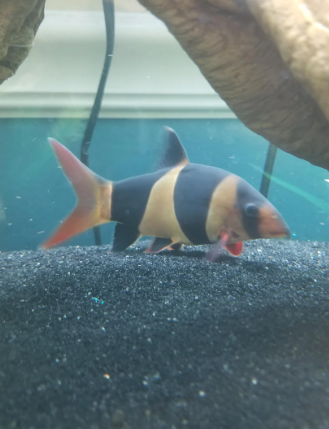
4. Tips for Keeping Clown Loaches Happy
Clown loaches aren’t hard to care for, but there are a few things you’ll want to keep in mind:
Stable Water Quality
They prefer clean, flowing water. Keep the temperature between 24–28°C (75–82°F) and maintain a balanced pH level. Regular water changes are important to keep things fresh and healthy.
Lots of Hiding Spots
Add caves, rocks, and plants to your tank to give them places to hide and play. Clown loaches love hiding—it helps them feel safe and comfortable.
Balanced Diet
They’re omnivores, so you can feed them fish flakes, frozen foods, or live treats like bloodworms or shrimp. Throw in a few veggie snacks like cucumber slices or spinach leaves every now and then for extra nutrition.
Keep Them Social
Avoid keeping just one. Having at least three clown loaches makes a huge difference—they’re way happier and more active with their buddies around.
5. Daily Fun with Clown Loaches
Every day when you lift the tank lid, your clown loaches might race over to greet you, hoping for some tasty snacks. They’ll swarm together, snatching food with full energy.
You might catch them goofing around—bumping each other, diving into plants, or even swimming in a neat little line. Super cute, right? And under the lights, their orange and black stripes look even more vibrant, like little performers in a watery circus.
Their curiosity and playfulness make the whole aquarium feel more alive. Even the other fish seem to pick up on their energy, turning your tank into a lively little underwater world.
6. Final Thoughts
All in all, clown loaches are like the shining stars of any aquarium. Their striking looks and cheerful, easygoing personalities have made them a favorite among fish keepers everywhere. If you want to add more life and fun to your tank, clown loaches are a fantastic choice.
Their fun-loving ways will have you coming back to the tank every day, just to enjoy the delightful world they bring beneath the water’s surface.
https://www.wonhat.com/the-ultimate-guide-to-ornamental-fish-species-care-and-thriving-aquariums/
The Low-Key King of the Aquarium: The Irresistible Charm of Black Molly
https://www.wonhat.com/the-ultimate-guide-to-ornamental-fish-species-care-and-thriving-aquariums/
If you have ever kept fish or plan to, you’ve probably heard of the Black Molly. This fish is entirely black—unlike the colorful guppies or zebra fish, it doesn’t catch your eye at first glance. But those who have kept Black Mollies know that the more you raise them, the more you grow fond of them. They are like the low-key kings of the aquarium—quiet and unassuming, always swimming calmly in the corner, wearing a sleek black “evening gown” that makes them look exceptionally classy.
Deep Black Beauty — A Sense of Sophistication
The most distinctive feature of the Black Molly is its all-over black color—not gray or dull, but a deep, shimmering black that sways like satin underwater. Amid a tank full of colorful fish, it stands out like a calm commander, exuding composure and steadiness.
This ultimate black gives it a very upscale feel—especially in dim lighting and densely planted tanks, where the contrast between black and green is simply stunning. Some fishkeepers even deliberately keep gold or silver fish alongside to highlight the Black Molly as a focal point through contrast.
Easy to Keep and a Tank “Cleaner”
Don’t be fooled by its cool look; Black Mollies are highly adaptable and tolerant of water conditions. Whether in freshwater or mildly brackish water, as long as the temperature is between 24°C and 28°C, they stay active. For beginners, they are a “worry-free” choice.
Moreover, Black Mollies enjoy eating algae. They happily nibble on string algae, brown algae, and green slime in the tank. Although they can’t replace professional algae-eaters, they make diligent “part-time cleaners,” especially effective at keeping green algae off tank walls and stones.
Gentle Temperament with a Little Personality
Black Mollies have a peaceful nature and won’t attack other fish, so they mix well in community tanks. However, males may sometimes spar over territory, causing minor skirmishes that rarely escalate — more like playful quarrels.
They are naturally active swimmers, unlike some fish that hide all day. Groups of Black Mollies dart around, adding vitality and energy to the aquarium.
Livebearers — Watch Out for Population Surprises!
Black Mollies give birth to live young instead of laying eggs. If males and females are kept together under suitable conditions, they can breed quickly—often surprising new owners when little black fry suddenly appear in the tank.
If you don’t want your tank to turn into a nursery, consider keeping only one gender or controlling population density.
Tips for Keeping Black Mollies Beautiful
Planted Tank Pairing: Black Mollies and aquatic plants are a classic combo. Deep green plants like moss, crown grass, and pennywort enhance the fish’s color.
Community Compatibility: They get along well with peaceful small fish like guppies, zebra fish, neon tetras, and platies. Avoid aggressive or large fish such as bettas, tiger barbs, or cichlids.
Substrate and Background: Use dark substrate with light-colored backgrounds or plant walls to highlight the Black Molly’s noble, cool appearance.
Summary: A King’s Presence in Subtlety
At first glance, Black Mollies may not dazzle like guppies or angelfish, but their charm lies in understated purity. They don’t flaunt colors or elaborate fins; they just quietly swim in a corner of the tank. But the more you watch, the more you become captivated, reluctant to look away.
They don’t require much fuss to care for yet silently hold their place, being a presence that doesn’t steal the spotlight but cannot be ignored. So if you want a fish that’s easy to keep, good-looking, steady, and exudes a touch of sophisticated black elegance, Black Molly is definitely worth adding to your aquarium.
https://www.wonhat.com/the-ultimate-guide-to-ornamental-fish-species-care-and-thriving-aquariums/