https://www.wonhat.com/the-ultimate-guide-to-ornamental-fish-species-care-and-thriving-aquariums/
When it comes to ornamental fish, many people immediately think of the gentle, quiet goldfish or the elegant, noble discus. But if you’ve ever kept a genus, you’ll discover it’s anything but the quiet, background-filled, and refreshingly simple. The daily life of a genus can be summed up in two words: domineering .
It’s not the gentlest in the aquarium, but it definitely has the most presence. Some say raising a tuna is like living with a fiery-tempered older brother; others jokingly call it the “little bully” of the aquarium world, flaunting its beauty and commanding presence. Today, let’s discuss why tuna are so aggressive and what it’s like to live with one.
Artistic patterns
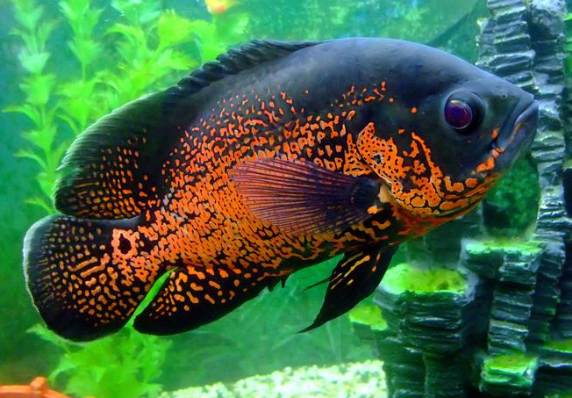
The map fish is so called because its markings are as complex and varied as a map. The orange, red, black, and gray intertwine, as if someone has casually splashed paint in the water and happened to create an abstract painting of nature.
Moreover, each Atlas fish’s pattern is unique, like a fingerprint. Sometimes, if you stare at its body for long enough, it feels like it’s telling you a story: a continent, a river, even a drifting cloud. Ornamental fish enthusiasts love this “self-contained canvas” feeling; owning an Atlas fish is like owning a living, moving work of art.
A bit hot tempered
The appearance of an artist is coupled with the personality of a bully. The map fish is extremely territorial, believing its aquarium to be its world. Any fish that dares to enter its territory will be chased or pecked.
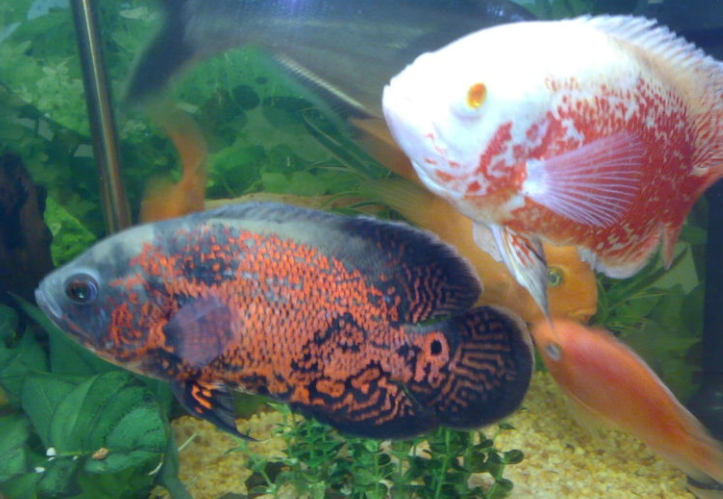
Even more interesting is that they’re particularly prone to competitive behavior with their own kind. Two map fish in the same tank are likely to engage in a daily battle for supremacy. Watching them shove each other mouth to mouth is nothing like the kissing of kissing fish; it’s a head-on, head-to-head, arm-wrestling match.
Therefore, many experienced fish lovers remind novices: either keep only one map fish, or keep a large fish tank and add some companions that can compete with it. Otherwise, you may have to clean up the butts of the bullied fish every day.
The side of the “house-destroying demon”
The trevally is nicknamed the ” renovator” of the aquarium world . It particularly enjoys rummaging through the tank’s decorations, chewing and moving rocks, plants, and even driftwood. The tank you painstakingly arranged yesterday might be completely redesigned by it the next day.
Some people jokingly say that the ichthys is the real owner of the aquarium, and you are just a temporary babysitter. You want it to stay in a nice environment, but it will move everything in the aquarium upside down, as if to tell you: “This is my territory, I have the final say.”
But to be honest, although this kind of “house-destroying behavior” is a headache, it also makes people laugh and cry. You will find that the map fish is really a bit childish and naughty, and a little cute in its domineering nature.
Foodie
Despite their domineering nature, the Atlas fish has another unique characteristic: its appetite. It consumes almost anything, from small fish and shrimp to insects and pellets. Sometimes, when it’s extremely hungry, it will suddenly burst to the surface, splashing and startling its owner.
Because of this, Atlas fish grow so quickly. A tiny fry can grow to the size of your palm in just a few months, and after a while, you might need to move to a larger aquarium to accommodate it. Some jokingly say that keeping an Atlas fish isn’t like keeping a pet, but rather a “water beast.”
It also has gentle moments
Although the Atlas fish has a domineering appearance and a fiery personality, you will find that it is actually a bit “human-like” after raising it for a long time. Many fish keepers have found that when the owner approaches the fish tank, the Atlas fish will actively swim over, as if to interact with you.
Some map fish can even recognize people and become particularly close to the person they feed. If you gently tap on the glass of the fish tank a few times, it will come closer, as if responding to you.
Therefore, the charm of the map fish lies in its sense of contrast: on the one hand, it is the little bully in the fish tank, and on the other hand, it is the “domineering president” who will interact with you, which both gives you a headache and makes your heart beat.
Tips for raising map fish
If you also want to challenge this “little bully”, you must do your homework in advance:
Prepare a large fish tank : The map fish can grow to 20 cm or even larger, and a small tank is not enough for it to run wild.
Don’t mix fish randomly : it is not suitable for small and gentle fish, and there is a high possibility of “tank bullying”.
The food should be balanced : Although the baby can eat, you should also pay attention to nutrition. Don’t always feed live food as it will easily become picky.
Accept the fate of “demolition” : either put fewer decorations, or be prepared to rearrange the fish tank every day.
At last
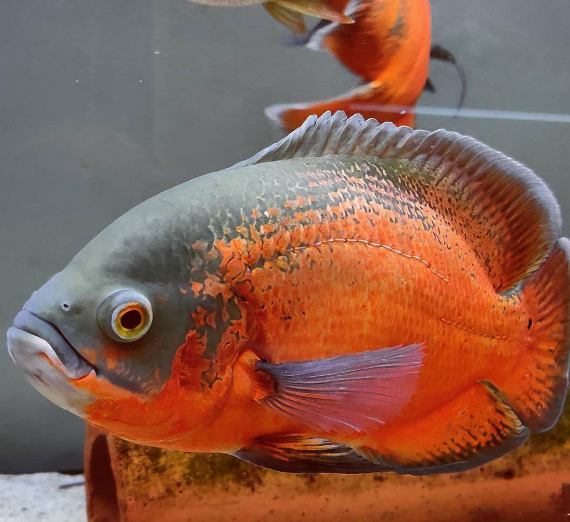
The trevally is no gentle, fresh-faced fish; it’s the king of the aquarium. Its dominance, its playfulness, its appetite, and even its proclivity for destroying things make it both beloved and hated. Some give up on keeping it because of its temper, but many more are captivated by its unique personality.
Ultimately, raising a genus is more like raising a companion with a temper than simply an object for appreciation. It’s more than just a piece of scenery in your aquarium; it’s a living being with a strong presence, a constant reminder that the aquarium world has its own “little tyrants.”
https://www.wonhat.com/the-ultimate-guide-to-ornamental-fish-species-care-and-thriving-aquariums/