https://www.wonhat.com/unique-aquatic-wonders-a-guide-to-marine-and-freshwater-marvels/
When it comes to creatures that can “generate electricity” in the water, most people immediately think of the electric eel.
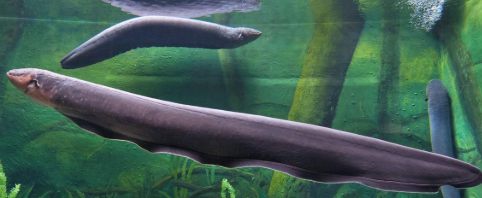
It may look ordinary at first glance—a long, grayish, unremarkable body—but in reality, it’s like a super-powered arsenal of the freshwater world.
Electric eels can generate electricity using their own bodies, and their voltage is so high that it can instantly stun their prey—just like someone suddenly cutting the main breaker in your house.
Today, let’s talk about how electric eels use electricity to take down their prey.
Meet the Electric Eel: Plain Looks, Extraordinary Power
Electric eels mainly live in the Amazon Basin of South America and have been residents there for ages.
Despite its name, the electric eel isn’t actually an eel—it’s more closely related to knifefish and arowana.
Its body is long and slender, reaching up to two meters in length and weighing up to 20 kilograms—like a living underwater power cable.
Here’s the fascinating part: almost the entire body of an electric eel is like a power plant.
Its electric cells (called electrocytes) are arranged in large “battery packs,” making up over 80% of its body length.
While other fish use their muscles for swimming, the electric eel uses its muscles… to generate electricity.
How Powerful Is Its “Charge”?
Many people wonder how strong an electric eel’s discharge really is.
The answer: extremely powerful.
An adult electric eel can generate between 600 and 800 volts, with some recorded cases exceeding 860 volts—several times higher than the voltage of a household outlet (220 volts).
And it can keep the discharge going for several hundred milliseconds, leaving prey completely paralyzed with no chance of escape.
Electric eels have two modes of discharge:
Low-voltage mode – Used to sense the surrounding environment, like a radar.
High-voltage mode – Used to unleash a full-force attack, putting prey into an instant “shutdown” state.
The Hunting Process: Scan First, Then Strike
Electric eels don’t just blast out electricity blindly—they’re smart hunters. Here’s their usual hunting sequence:
1. Radar Scan
The eel emits low-voltage pulses to probe its surroundings.
Since water conducts electricity, any movement from another creature disturbs the electric field, allowing the eel to pinpoint the prey’s location.
2. Target Lock
Once it detects a target, it approaches slowly to avoid startling it.
Sometimes, the eel will use its body to corral the prey into a smaller area.
3. High-Voltage Ambush
When the target is within striking range, the eel releases a powerful high-voltage shock.
This causes the prey’s muscles to contract instantly, freezing it in place.
4. The Final Bite
Before the prey recovers, the eel grabs it with its strong jaws and swallows it whole.
With sharp teeth and a strong bite, it can take down small fish, shrimp, and even small turtles.

Electricity Beyond Hunting
An electric eel’s electrical ability isn’t just for catching food. It also uses electricity for:
Defense – Against predators like large fish or caimans, delivering a warning shock to drive them away.
Communication – Sending low-voltage electrical signals to other eels, like secret codes.
Navigation – In murky waters, its electric “radar” works better than vision.
Can an Electric Eel Kill a Human?
This is a question many people ask.
In theory, a high-voltage discharge from a large adult electric eel can be dangerous to humans—especially if shocked repeatedly in the water.
It can cause muscle paralysis, drowning, or even cardiac arrest.
However, wild electric eels generally don’t attack humans unless provoked or threatened.
What Humans Have Learned from Them
Scientists have long studied electric eels for their impressive ability to generate and control electricity with high efficiency.
This research could inspire advances in better batteries, bio-electric power sources, and even bio-inspired robotics.
Conclusion
The electric eel is like a high-voltage predator of the aquatic world.
It doesn’t rely on speed to catch its prey but instead uses its unique electrical attack to instantly disable its target—a hunting strategy almost unmatched among freshwater creatures.
So, next time you’re exploring the Amazon and happen to see one, keep a safe distance—this underwater hunting master’s electricity is no joke.
https://www.wonhat.com/unique-aquatic-wonders-a-guide-to-marine-and-freshwater-marvels/